


for European Studies
Big Questions about Europe and Humanity
Questions about Europe are questions about the planet, our common home.

The Nanovic Institute, with its tradition of research in the humanities and continuing interest in the intersection between humanities and policy, is particularly interested in analyses of and responses to “big questions” about Europe.
These fundamental questions pose major moral challenges with implications for
Since European issues are global and human issues, these “big questions” also have implications for the world and humanity. These may include normative and spiritual traditions in Europe, European colonialism and its legacies, racism and inequality, migration and the ethics of borders, ecological responsibility, and the climate crisis, resilient democracies, issues of intergenerational justice and poverty, the arts and storytelling, and an understanding of the common good. We welcome research on these “big questions” from many different perspectives and disciplines.
A growing area of research across disciplines focuses on sustainability. Preserving the resources of land, water, air, plants, and wildlife requires a deep investigation into a wide range of topics, such as sustainable power generation, recycling, the control of emissions, and pollution reduction.
The Nanovic Institute has responded by organizing a wide range of research projects, which utilize its core strength and advantage of deep engagement with Europe. By facilitating cross-cultural and global learning, especially among students, the institute is contributing a unique profile of research to this core priority within the Keough School of Global Affairs.
For example, in November 2025, a student research group published a policy brief exploring how the State of Indiana can learn from the experiences of several European countries in developing agrivoltaics—the dual usage of land for agriculture and solar energy production. A presentation of these findings to the Indiana State Legislature is planned.
In June 2025, a student online exhibition, Unveiling the Climate Apocalypse, was released that focused on depictions of the climate apocalypse in various media took an arts-based approach to this same topic. This permanent exhibit and essay collection explores how humans have imagined the worst possible consequences of climate change and how these artistic works inform our collective understanding of sustainability.
Beginning in the spring 2023 semester, the Decolonizing Scholarship lecture series brought scholars at the top of their fields in a variety of disciplines, from theology to Francophone studies to literature and more, to Notre Dame to share how to reconsider these areas of scholarship from a different perspective. The guest lecturers brought new ideas and perspectives on the project of reconceptualizing their disciplines in ways that break away from and challenge the legacies of colonialism.
These questions are important and difficult, and these preeminent scholars brought fascinating and challenging insights to Notre Dame’s scholarly community.
All lectures in this series can be found on our YouTube channel; Q&As with the scholars and event briefs of their lectures can be found on the Europe in the World blog.
Read more on Europe in the World
If you are investigating any big questions that might have implications for Europe, and by extension, the world, you are invited to join with the Nanovic Institute. Depending on whether you are a student or faculty member, our process differs, but to get involved, please click the button below to let us know through a brief (five-minute) form.
Norway
The student traveled to Norway to study the innovative prison policies prioritizing relationships and restorative justice. She observed how incarceration intersects with immigration in line with human dignity priorities championed by prison reforms and their impact on political discussions. Additionally, she explored how agencies outside of prisons assist with transitioning into and out of incarceration, laying the groundwork for future thesis work comparing objectives and methods of similar organizations in the US.
Belgrade, Serbia
This graduate student project explored how structured social practices are critical to preserving cultural traditions and meaning-making in refugee populations who find themselves in challenging socio-ecologies, thereby contributing to stress mitigation and relatively better health outcomes. The project sought to map structured social practices as emergent social phenomena in Serbia that can be compared across refugee populations, measuring their effect on stress and health.
Faculty Advisor: Rahul Oka
Assisi, Italy
This faculty grant provided funding for travel to “The Economy of Francesco” conference, an international meeting between young scholars and activists in the field of economics for which Ilaria Schnyder von Wartensee had been invited to serve as a Senior Member. The conference, convened by Pope Francis, aimed at studying and creating an economy “that brings life not death, one that is inclusive and not exclusive, humane and not dehumanizing, one that cares for the environment and does not despoil it” (“Letter by Pope Francis for the Event ‘Economy of Francesco’ in Assisi,” Pope Francis, 2019).
The student conducted a comparative analysis of freedom of speech between the US, UK, and Germany for their senior thesis. They met with government and NGO organizations in the UK and Germany to explore the legal protections and societal discourse surrounding freedom of speech in each country.
Copenhagen, Denmark
Many nations in the European Union are beginning to combat the persistent gender pay gap through targeted policy, and one nation taking the lead is Denmark, which published the first empirical study on the efficacy of its legislation. This undergraduate spring break project investigated the qualitative and quantitative efficacy and feasibility of legislation that requires companies to report pay gap statistics, their broad and long-term implications, and potential alternatives or extensions.
Faculty Advisor: Kevin Whelan
London, UK; Limerick, Ireland
This undergraduate summer break project examined the benefits, disadvantages, and overall effectiveness of public healthcare systems in the United Kingdom and Ireland, two model countries for universal healthcare. The project centered around interviews with doctors, professors, employees of the NHS/HSE, and other professionals who work with these organizations.
Faculty Advisor: Jennifer Robichaud

Zurich, Switzerland
This undergraduate fall break project investigated why the Swiss financial industry was delayed in utilizing public cloud services and solutions that many other competitors utilized. The project sought to propose a viable solution for how Swiss banks, particularly Credit Suisse, could work with Swiss fintech startups to implement public cloud strategies in a more efficient, secure, and scalable manner.
Faculty Advisor: Peter Bui
The student traveled to England to examine medieval manuscripts regarding the apocalypse. The end of the world was a topic of great significance in England during the 9th to 11th centuries; around one third of the two hundred surviving English manuscripts from this period contain sermons and meditations on the Apocalypse. During this time, England experienced great social and political upheaval caused by invasions and natural disasters. Many saw the timing of these calamities, so close to the portentous year 1000, as a clear indication that the Apocalypse was near. However, no comprehensive study of the evolution of apocalyptic writing in England has been conducted. The project addresses this oversight and the resultant simplification of early English apocalypticism by examining all known religious apocalyptic texts from 800-1100, by both known and anonymous authors.
Dublin, Ireland
This undergraduate fall break project addressed the influence of the Irish language on Irish nationalism amongst women during the 1916 Easter Rising. Specifically, how something as simple as an Irish language class offered to women in Universities awakened and attracted them to the militant cause of Irish Nationalism. The project sought to make connections to contemporary Irish pride and the role of the Irish language in the present-day Irish identity.
Faculty Advisor: Paul Ocobrock
The project involved travel to Barcelona and Bilbao to explore how and why football clubs, specifically F.C. Barcelona and Athletic Club Bilbao, contributed to the resurgence of Catalan and Basque nationalism during Spain’s transition to democracy from 1975-1982. The research involved examining club archives and conducting oral history interviews with players, managers, administrators, and fans from the period for a senior thesis.
London, UK; Dublin, Ireland
The long-term economic implications of the Brexit referendum are still heavily debated, as though the referendum passed in 2016, the United Kingdom only officially exited the European Union in 2020. This undergraduate summer break project focused on one aspect of Brexit’s economic impact, exploring the future of cross-border mergers and acquisitions in the UK and Ireland following Brexit. The project employed interviews with experts from esteemed institutions and corporations.
Faculty Advisor: John Michel
The student spent 11 days in Germany to study the unequal resurgence of the far-right across former East and West Germany. During the trip, they conducted interviews with politicians, government employees, and experts on the subject. Additionally, they utilized the national archives to delve into potential explanations for the stronger resurgence of the far-right in the eastern part of the nation.
Notre Dame, Indiana
This faculty grant sponsored an international conference marking the anniversary and assessing the state of John Rawls’s A Theory on Justice. This book's conclusions have been transformative in philosophy, law, economics, religious ethics, and other related disciplines. The conference attracted many intellectual luminaries, specifically in the realm of political philosophy.

Elsa Barron is a second-year PhD student in the Kroc Institute’s PhD program in Peace Studies and Political Science. For several years, she has studied climate policy and its disproportionate effects on developed and developing countries. Because of a lack of access to resources for adaptation, least-developed countries (LDCs) are some of the most at risk, despite having contributed least to the causes of climate change. Last year, Europe wasn in the spotlight on climate policy development as the host of the UN conference on climate change (COP29). The opportunity presented a unique moment where regional host Azerbaijan, situated on the peripheries of Europe, orchestrated negotiations on policy considered crucial to human dignity across other global peripheries– communities that have often been considered disposable. Barron. With support from the Nanovic Institute for European Studies, the Kroc Institute for International Peace Studies, and the Christian Climate Observers Program, Barron traveled to Azerbaijan to attend COP29 and deepen her understanding of international climate justice.

One core question guided Barron’s research at COP29: “Is the current UN Loss and Damage Framework sufficient to achieve climate justice according to global civil society? If not, would a truth and reconciliation process contribute to filling this gap?” To answer these questions, Barron leveraged the unmatched convergence of civil society in Azerbaijan to gain a global perspective on the meaning and requirements of climate justice. Throughout the week of the conference, she conducted nearly twenty in-depth interviews with civil society leaders to understand how the communities they work with are impacted by climate change, conceptualize climate justice, and seek out accountability and reconciliation for harm. Interviewees included experts on migration, Indigenous rights, finance, peacebuilding, and representatives of international faith communities. Conversations were centered around pressing concerns related to climate impacts, understandings of climate justice, gaps in the current framework of loss and damage, and pathways forward toward greater justice and accountability. At the end of the conference, the final agreement of $300 billion in collective financing to be provided annually was far less than the $1 trillion demand put forward by many negotiators, increasing the imperative for research exploring the gaps between current policy development and needs on the ground. Barron’s ongoing reflections circle around the failures of the post-Paris COP process to produce action commensurate with the climate crisis at hand, constantly held back by the agendas of geopolitically powerful nations. It re-emphasizes the need for more radical interpretations of climate action and understandings of climate justice centered on lived experiences of climate-induced losses and damages.

Barron’s trip to Azerbaijan represents the first steps of her dissertation, which more broadly explores the question: In the context of climate change and particularly for communities facing the loss of home, what policy avenues are required to achieve climate justice? She also intends to use this research to develop a journal publication that will not only advance academic understandings of climate change and justice but also present avenues for innovative policy development that better suit the needs of communities most impacted by climate change.
The student traveled to Malta to conduct field research on questions of identity, language, and conspicuous difference using ethnographic and archival methods. The project aims to examine how residents of Malta perceive non-Maltese people on the island country. Malta is an interesting case for questions about national identity, in part, because Maltese identity has been elusive and non-obvious. Among Maltese people, there has not been consensus about what Europe means to Malta or how Malta fits into Europe.

For the past six years, Nicholas Herrud has studied French, German, Polish, Russian, and Ukrainian in hopes of becoming a historian of eastern European borderlands. In 2023, he wrote his master’s thesis on Poland’s occupation of Western Ukraine and its creation of the Polish-Soviet War. As war continues to damage Ukraine, Herrud is reminded of the 1920s and 1930s, when Poland and the Soviet Union sought to establish sovereignty over diverse borderlands left by the old empires. While Moscow and Warsaw struggled with multiethnic borderlands, they pursued their policies differently. Polish leaders promoted a multicultural model for Poland, allowing local languages and customs to be tolerated, whereas ethnic groups of the Soviet Union lived under a totalitarian regime that sought uniformity in its ethnic policy. Herrud believes the current war in Ukraine may benefit from studying this past borderlands crisis, and he received support from the Nanovic Institute and Keenan Institute to travel to Washington, D.C. to deepen his investigation.

In D.C., Herrud compared and contrasted Poland with the Soviet Union and their respective impact on half of the European peninsula from 1921-1939. He was pleased to complete two weeks of research, collaborate with knowledgeable archivists, and develop the bibliography for his dissertation proposal. Herrud spent most of his research time in the European reading room in the Library of Congress, working with two specialist librarians, Angela Cannon and Regina Frackowiak. In the Library of Congress’ Maps and Geography room, Herrud also spent a great deal of time scanning various maps of Poland and the Soviet Union. The National Archives also provided him with access to U.S. foreign policy documents describing the population shift in Eastern Europe during the interwar period. Upon returning to South Bend, he was grateful to have had the opportunity to depict the borderlands as a more extensive region that is distinct from national narratives.
The student traveled to archives in Florence, Italy to conduct research on the rise of the Medici family in 15th century Florence. The student’s dissertation sets out to address not simply how the contado, the region of the Tuscan countryside near the Mugello Valley, directly influenced the Medici’s rise to power, but examine the Medici themselves as a rural family. Viewing the Medici as a rural family fully immersed in rural networks and at the center of urban politics and society potentially offers new insights to their ability to garner popular support, evade coups, and maintain a consistent income. It also brings into question the significance of the Mugello’s status as a relatively new Florentine territory—acquired in the thirteenth century— and its history as a border region between Florence and Bologna. This project asks the question if the Medici—the Renaissance dynasty—were not urban elites, but a rural family, then can we call the Renaissance an urban phenomenon?
Paris, France; Berlin, Germany
This undergraduate winter break project explored the formation of national identity, specifically in the rather stable modern economic and political landscapes of France and Germany. The project investigated if and how a national identity must change when the equilibrium of cultural stability is tipped, focusing primarily on the recent growth of immigration in both countries.
Faculty Advisor: Sonja Stojanovic
London, England
Focusing on the T4 euthanasia program that systematically killed an estimated 70,000 people with disabilities and mental ilnesses in Nazi Germany, this undergraduate fall break project explored the complex relationship between the ideologies of Nazi perpetrators and America’s own eugenic beliefs. The project utilized documents in London’s Wiener Library which holds the complete records of the UN War Crimes Commission.
Faculty Advisor: John Deak
Granada and Seville, Spain
This undergraduate summer break project studied gridded towns in the regions of Andalusia and Extremadura in Spain to understand their role as precedents in colonial American urban planning. The project utilized archival data and compared these to Spanish colonies in America.
Faculty Advisor: Selena Anders
Notre Dame, Indiana
This faculty grant provided funding for a European speaker to visit each iteration of “Europe Through Film” (two semesters of classes). The directors, actors, writers, and producers of cinematic works are primary sources for learning about the motivations, means, and ideas behind the important films they have produced. Meeting with someone involved in European filmmaking provided an opportunity for these students and faculty to deepen their understanding of European film.
Toronto, Canada
This faculty grant provided funding for travel to the Toronto International Film Festival to attend screenings of new international releases, network with distributors, and recruit potential speakers (including directors, writers, actors, and producers). The grant also funded selections for the Nanovic’s Debartolo Performing Arts Center and Browning Cinema public screenings, as well as “Europe Through Film,” a one-credit course and film series.
Dublin, Ireland
Despite the traditional political science narrative which ties populism to the vices inherent in globalization and recessions, there is extreme support for the European Union among nearly all the Irish population. This undergraduate fall break project investigated Rodrik’s economic security thesis and the cultural backlash argument’s shortcomings in explaining Ireland’s relationship with the EU in response to critical junctures in recent geopolitics, namely the 2008 Financial Crisis and Brexit. The project aimed to discover what aspects of Ireland’s political system and history makes it an anomaly in this regard.
Faculty Advisor: Andy Gould
The Hague, Netherlands
This undergraduate fall break project explored the development and structure of international human rights systems, focusing on how amnesty laws preclude the threat of prosecution in non-domestic courts. The project considers the jurisdiction of the Nuremberg trials and compares its development to the International Criminal Court’s mandate, which includes crimes against humanity and war crimes.

David Batt is a PhD student at the Department of History. His primary academic interest is the “history and development of economics from the perspectives of history and philosophy of science.” He is particularly fascinated by the sixteenth-century price revolution (1500-1650), when the price of essential items of everyday consumption (grains, textiles, fuels, etc.) increased by ~six times on average. In his PhD research, Batt is interested in understanding how individuals who lived through this period of high inflation described their experience of increasing prices. He believes that understanding these early modern experiences of inflation can help us better contextualize the tensions between inflation and the quantitative techniques used to measure it. With sponsorship from the Nanovic Institute and Franco Family Institute, Batt traveled to the London Archives to study European inflation in the late 16th and 17th centuries.
In London, Batt carefully flipped through the records of the Worshipful Company of Bakers of London, the main organization of the city’s early modern professional bread makers. 2 This archive not only holds the records of John Storer, chief warden of the Bakers’ Guild, but many other important London bakers of the 16th and 17th centuries. Preserved complaints, petitions, and government correspondences demonstrated that, despite a lack of complex statistical techniques for measuring rising prices, early modern England used quantitative techniques to capture its understanding of rising prices. In particular, London bakers presented a quantified version of their own lived experience to advocate for higher allowances from City officials.

In his investigation of inflation’s influence on London’s bakers in the 16th and 17th centuries, Batt was pleased to have collected several primary sources for the PhD dissertation he is completing at the John J. Reilly Center. As he continues his studies at Notre Dame, he hopes to continue to illuminate the important relationship between personal experience and quantification.
"This research I hope will help to place the inflation we experience today in a better historical context, highlighting the way quantitative forms of experience were first used as informal rhetorical techniques before they were institutionalized in official statistical methodologies."
Córdoba, Sevilla, and Granada, Spain
This undergraduate winter break project investigated solutions to sustainable gardening practices using traditional Moorish architecture from three Spanish cities as case studies. The project sought to address how architecture in these cities is similar, how the interior spaces interact with the garden, and how techniques aimed at environmental and architectural sustainability might be employed in modern Europe.
Faculty Advisor: Lucien Steil
During his stay at the Nanovic Institute as a visiting scholar during the fall 2024 semester, Volodymyr Turchynovskyy finished editing of papers from the conference “Challenges of Russia’s War against Ukraine and the Ethical Principles of Sustainable Peace in Europe,” held in Munich, Germany, on February 12–13, 2024, in anticipation of the 2024 Munich Security Conference. This symposium was made possible through the collaboration of Ludwig Maximilian University (LMU), the Ukrainian Catholic University (UCU), and the University of Notre Dame – three leading academic institutions from Germany, Ukraine, and the United States – and the support of the Catholic Church through the charitable organization Renovabis, the Archdiocese of Munich and Freising, and the Ukrainian Greek Catholic Apostolic Exarchate in Germany and Scandinavia. At a time when Ukraine faces the existential challenge of war with the Russian aggressor, Catholic intellectuals are contributing to critical discussions on sociopolitical and security issues, offering value-based guidelines for their resolution. The papers in this volume examine the traumatic experiences of the past, contemporary manifestations of totalitarianism, the ethical dimensions of global security, opposition to Russian aggression, and the principles for achieving a just peace.
London and Cambridge, England
This undergraduate summer break project explored the uneasy neutrality of fascist Spain during World War II and the British struggles to maintain Spanish neutrality. The project studied the intersection of the reality on the ground of Franco’s Spain, contemporary British perception, and actions taken by the British government, through the use of Hoare and the SOE to prevent Spain’s entry into the Axis powers. The project aimed to serve as an example of the gap between expectations and reality in international relations, particularly during wartime.
Faculty Advisor: Rev. Robert Sullivan
Dublin, Ireland
This undergraduate spring break project investigated the interactions between science and poetry—exploring how the communication of medical concepts to the general population can be improved by thinking innovatively and organically, as is done in poetry. This project centered around historic interactions between science and poetry, particularly in Celtic Ireland
Faculty Advisor: Christopher Stevens
The student traveled To England to conduct research on the gendered conceptions of honor in medieval Ireland. The project hopes to complicate the Anglophonic idea that honor in Ireland was solely the province of men, and that it was far from limited to an elite sphere, a product of noble culture alone. In doing so, this work challenges much of the historiography on honor in Ireland, though that literature remains somewhat thin. However, this work also seeks to situate itself within the larger historiography on honor in the late medieval period and early modern period, pointedly engaging with the broader literature on medieval chivalry as a foil. In doing so this project seeks to re-center Ireland within multiple historiographical conversations concerning honor culture.
Connemara, Ireland
This faculty grant supported the “Global 1776” Conference at Notre Dame’s Kylemore Abbey Global Center. The conference explored the year 1776 in global history through multiple disciplines, assessing the key events of the year and their effects on history in a setting that allows participants from disciples that seldom interact to engage in a mutual topic of interest. The conference sought to answer questions including how to connect key texts and events from the period, how to establish proper contexts, and how we should conceive the “global."
Paris, France
Global consumers are becoming more aware of the harmful effects of mass production, and as fashion is no exception, Paris has taken its first steps to leading the sustainable revolution. This undergraduate winter break project explores the wide range of approaches, but lack of clear vision, among many boutiques in Paris. The project sought to understand how different business types are approaching this global issue.
Faculty Advisor: Sonja Stojanovic

As a Global Affairs and European Studies student, Natalie Morris has had numerous opportunities to engage with one of her favorite areas of academic curiosity: democratic backsliding in Europe. In the course “European Politics,” taught by Associate Professor Andy Gould, she learned of the institutional structure, strengths, and weaknesses of the European Union (EU), which is experiencing a widespread decline in confidence from constituents across member states. As populist parties across Europe have touted “anti-EU” rhetoric, skepticism has replaced once-ubiquitous support for the Union. However, after noticing that Poland demonstrates support for the EU, Morris was intrigued. Given that the populist PiS party remains one of the most dominant parties in the Polish Parliament, why has the nation not leaned towards Euroscepticism? Fueled by a desire to explore this academic question, she spent her Spring Break in Warsaw, Poland to conduct an independent research project.

While in Warsaw, Morris sought to understand the nuances of perceptions of the EU and identity formation by examining the relationship between Polish identity and the propensity to vote for populist parties. As she administered surveys and conducted in-depth interviews with a diverse group of academic and political experts, she received insight from a member of the Polish Parliament, a professor of sociology at the University of Warsaw, several CEOs and local business leaders, and members of the Polish Catholic clergy. Their scholarly contributions allowed Morris to develop a multifaceted understanding of Polish identity. They identified key factors that may have contributed to changes in how Poles construct their sense of national belonging, such as Poland’s nascent economic growth, the Ukraine War and shifting geopolitical dynamics across the continent, the country’s recent history of extensive out-migration, and the Polish Catholic Church’s traditional moral authority as a symbol of national unity.
Morris’ research illuminated unexpected nuances in how Polish identity is constructed, as historical narratives that have shaped Polish national identity contradict with contemporary narratives that diverge from Polish tradition. Additionally, her independent project held a dual academic and professional benefit; as she learned how to independently navigate in unfamiliar environments and engage confidently with experts in a professional setting, Morris identified a potential subject for her Senior Capstone project.
Notre Dame, Indiana
This faculty grant provided funding for Notre Dame’s institutional membership to the European Consortium of Political Research. The university’s membership in ECPR benefits many social science and humanistic graduate students and faculty.
Copenhagen, Denmark
This undergraduate fall break project examined Danish intentional co-housing communities’ functioning, the structures (both physical and abstract) that contribute to the longevity, popularity, and scalability within greater Danish Society. The project explored how the built environment contributed to the well-functioning and collaborative successes of intentional co-housing communities in Denmark.
Faculty Advisor: David Ruccio
Geneva, Switzerland; Notre Dame, Indiana
This faculty grant co-sponsored a summer internship for one student at the International Campaign to Abolish Nuclear Weapons (ICAN) with the Kroc Institute for International Peace Studies. This internship program through the Kroc Institute was the first of its kind, cementing the program and the university’s relationship with ICAN.
Notre Dame, Indiana
This faculty grant provided funding for a research cluster that explores the ambiguities of migration and cross-cultural exchange in culture and daily life during multiple periods of religious, political, and cultural upheaval, particularly in the European context. This research cluster sought to answer what it means to welcome—or reject—the “stranger,” whether these strangers are enemies or friends, and whether they are our “neighbor” or a threat to our way of life.
Galapagos, Ecuador
This faculty grant supported the NDI Insider project “In the Footsteps of Charles Darwin” in the Galapagos.
Ireland
This faculty grant provided funding for the Ireland Engineering Education Exploration, offering a group of undergraduate students to study engineering education in Ireland. Students toured the engineering facilities in four different Irish universities, presented research or class projects to students at these partner universities, interviewed other undergraduate students, and sat in on classes from their discipline, among many other things. This experience was organized as a replacement for the Engineering Study Abroad Summer Programs, which were cancelled due to the COVID-19 pandemic.
Dublin and Enniskillen, Ireland; Celbridge, Northern Ireland
This undergraduate spring break project explored the architectural style of Irish Palladianism, a subgenre of Palladianism that has received little attention. The project sought to answer what caused this Palladianism to become so popular in Ireland, how the style was adapted to the climate and culture of Ireland, and how the style functioned as a precedent for American Palladianism.
Faculty Advisors: Jonathan Weatherill, Ingrid Rowland
Notre Dame, Indiana
This faculty grant provided funding for a visit from Ivan Gerginov, Deputy Commissioner, Commissariat for Refugees and Migration, Republic of Serbia. Gerginov held a public lecture sharing his experiences working with refugees and migrants from the Balkan crises to the present migrant crisis in Europe. He also held personal meetings where he advised faculty members on policy outreach and the need for policy interventions.
Rome, Italy
This faculty grant supported a conference on James Joyce’s novel Ulysses and its global reach, entitled “Global Ulysses.” The inaugural conference was held in Rome, where Joyce conceived and wrote most of the novel, interrogating Joyce’s themes both with European intellectuals and an “outside” speaker who represented a “non-expert’s” view.
Notre Dame, Indiana
This faculty grant provided funding for travel to a Notre Dame conference on “John Ruskin: Prophet of the Anthropocene,” where Henry Weinfield presented research. The conference explored how Ruskin’s legacy continues to challenge the disciplinary divides separating art from science and ethics from economics, and how his critiques of Victorian capitalism and industrialization inform our contemporary concerns.
Notre Dame, Indiana
This faculty grant supported an annual conference between the Notre Dame Department of History and the Bielefeld Graduate School in History and Sociology (BGHS). This workshop discussed precirculated graduate student dissertation proposals and chapters, providing feedback on projects and familiarizing these students with German academic culture. The conference also included excursions to cultural sites and social events in the evenings for networking and informal dialogue.
Notre Dame, Indiana
The ideas of Immanuel Kant influenced the history of Western philosophy incredibly, and his values of human autonomy and self-determination are invoked on both sides of many pressing debates in Europe today. This faculty grant supported a workshop that went to the roots of Kant’s philosophy, investigating his notions of autonomy and self-determination in the context of his theory of the self. The workshop brought together scholars on Kantian philosophy, opening new avenues for understanding Kant’s insights in contemporary terms, and generated ideas for a proposal for a larger project on the same subject.
Frankfurt, Wiesbaden, and Bonn, Germany
The Frankfurt-Auschwitz Trial (1963-1965) was designed to force all West German citizens to face their own complicity with the Nazi criminal system, but in reality failed to present the Holocaust as anything but a summation of individual crimes committed for individual reasons. This graduate student project examined the place of the Frankfurt-Auschwitz Trial in post-war Germany’s evolving relationship with domestic law. The project’s archival research informed a dissertation on the same subject.
Faculty Advisor: John Deak
Florence, Mantua, and Rome, Italy; Vatican City
This graduate student project investigated the linguistic situation of Leon Battista Alberti, an Italian architect and author, questioning how his linguistic and literary engagement with Latin, Greek, and vernacular language was shaped his public persona as a cultural innovator and the cultural discourses around him. The project explored Alberti’s movement among languages, rhetorical registers, linguistic forms, and shifting between written and visual forms of communication.
Faculty Advisor: Ted Cachey
The student traveled to Trieste and Vienna to conduct archival research on the life of Maximilian. The research seeks to place Maximilian into the liberal tradition of the Habsburg Empire, serving as a liberal alternative to the more conservative Emperor Franz Joseph. Much of the historiography on Maximilian has been focused on his role in the Second Mexican Empire, and his role in shaping liberal Central Europe has been largely ignored. This project seeks to fill that gap and shed light on how Maximilian’s life provides insight into the development of liberalism in Central Europe and beyond.
Reykjavik, Iceland
This faculty grant supported travel to and attendance at the Council for European Studies’s annual conference in Iceland. Magdalena Charzyńska-Wójcik and Dariusz Skórczewski delivered a panel at the conference entitled “Literary Perspectives on Social Conflict in Contemporary Europe.”
Notre Dame, Indiana
This faculty grant provided funding for 20 German and French students to view a live broadcast of operas at the Debartolo Performing Arts Center. These performances were opportunities for these students to experience the French and German languages in a meaningful context beyond their traditional classroom setting.
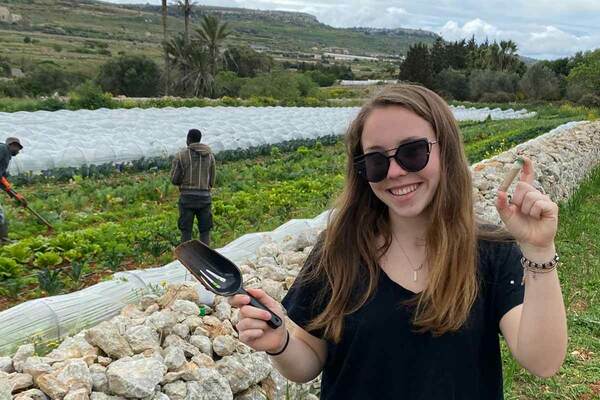
Mġarr, Malta
Lacking lakes, rivers, or reservoirs and thus relying on groundwater and desalinization, Malta faces rapidly approaching challenges due to climate change. This undergraduate spring break project examined whether Maltese soil is negatively affected by recycled water irrigation by analyzing and comparing soil pH and nutrient levels from farms irrigated with freshwater and recycled water.
Faculty Advisor: Donna Glowacki
Notre Dame, Indiana
This faculty grant supported a conference on research methodologies and experiences in Rome across the humanistic disciplines, organized by the Center for Italian Studies. Involving six different departments on campus and many faculty members, the conference explored Rome as a center of gravity within the western world and a hub in international humanistic research.
Rome, Italy
This faculty grant sponsored a workshop entitled “Micro-experiences of Care” led by Clemens Sedmak and Ilaria Schnyder von Wartensee as part of their larger research project with the Humanitarian Corridor (est. 2017). The project builds upon the understanding of the role of religion in international affairs, including themes of migration, integration, community building, and identity, and explores whether the migration model of a Humanitarian Corridor leads to successful integration. The workshop is an important feedback tool in the spirit of intellectual integrity, acting as a forum of exchange and informing stakeholders about the research’s methodology and progress.

Chania, Piraeus, Syros, Mykonos, Athens, and Amaliada, Greece
This undergraduate spring break project continued independent research on the effects of microplastics in the marine environment on the food chain and public health. This project studied samples of microplastic in various cities across Greece to draw conclusions about the extent of microplastic pollution and its potential effects on the diet and public health of Greek citizens. The project considered the issues of persistent organic pollutants and the ingestion of microplastics by surface-feeding fish populations.
Faculty Advisor: Jeremy Fein
Notre Dame, Indiana
This faculty grant sponsored a visit from Sandro Cattacin, a professor at the University of Geneva (Department of Sociology). Cattacin spoke at the Mendoza College of Business’s spring 2019 lecture series “Ten Years Hence,” presenting on European, Middle Eastern, and North African migration patterns and the Swiss national guest worker program. He also engaged with students in discussion and networked with faculty members.
Notre Dame, Indiana
This faculty grant aided in funding a research cluster on the theme of “Modeling the Mind in the History of Philosophy.” The research cluster examines the concept of “the mind” through European philosophical tradition and its interlocutors, exploring traditional and often neglected alternative models in a three-year cycle. The research cluster will involve academic activities including international visiting speakers and colloquiums, coordinated through Notre Dame’s History of Philosophy Forum.
London, England
This faculty grant provided funding for graduate students to travel to London for one week of archival research. The students “adopted” a London manuscript relevant to their own interests and currently available in digital reproduction and studied it while investigating theoretical and practical issues in digital humanities codicology. The students developed a project arising from their experience with the manuscript in both virtual and physical form.
Washington, District of Columbia
This graduate student project investigated high profile instances of tensions between the United States and the Soviet Union during the Cold War, questioning why the US chose to litigate some of these incidents while leaving others to be resolved politically. The project generated a journal article on the causal logic behind the litigation attempts, and afterward the research served as the basis for a book project on the diplomatic history of these events. The project sought to advance scholarship on the politics of the early Cold War in Eastern Europe, demonstrating how the string of attempts at international litigation initiated by the US in the 1950s reveals a presidential administration attempting to use law as a bargaining tactic in the European theater.
Faculty Advisor: Emilia Justyna Powell
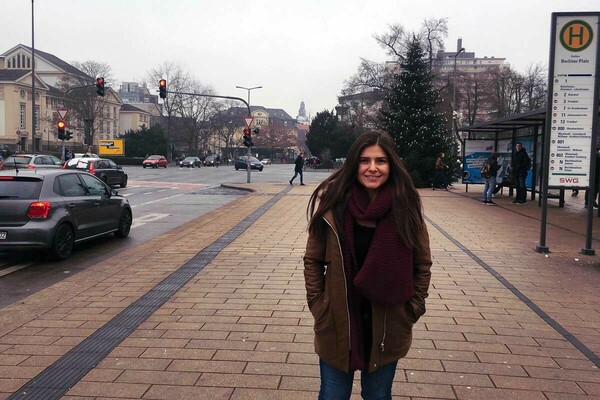
Berlin, Germany
This graduate student project studied how Zazaki-speaking immigrants and their descendants build their communities through everyday life practices in Germany. The project consisted of anthropological research in the form of long-term participant observation. The research done in this project informed a dissertation which explored how group identity is expressed across nation-states among minority immigrant populations by focusing on domestic and international migration of Zazaki speakers in western Turkey and Germany.
The student conducted a study on the cultural and educational integration of Maghrebi immigrants into French society in Southern France. The research examined integration through three dimensions: housing, education, and government/policy. Given the student's family ties in the region and proficiency in French, they were well-positioned to undertake this investigation.
Notre Dame, Indiana
This faculty grant provided funding for the book Peaceful Resolution of Territorial and Maritime Disputes (co-authored with Dr. Krista E. Wiegand, University of Tennessee). The book discusses reasons why states pursue bilateral negotiations, mediation, arbitration, or international adjudication as means of resolving conflict. The book mentions important international institutions responsible for peaceful settlement located in Europe, including the International Court of Justice, the Permanent Court of Arbitration, and the International Tribunal for Law of the Sea.
London, England
This faculty grant supported the fourth meeting of the Early Modern British and Irish Catholicism (EMBIC) Conference. The 2020 conference’s theme was “Popery, Politics, and Prayer,” exploring aspects and formation of the relationship between political and ecclesiastical institutions, as well as political and religious attitudes and ideas that established the historical foundations of the questions surrounding religion’s place in the secular state.
Lisbon and Coimbra, Portugal
When discussing the refugee crisis, Portugal is often overlooked; while many immigrants do not even consider the country as a destination, it has agreed to take double the number of immigrants allocated to them by the EU. This undergraduate spring break project investigated what the attitudes toward immigrants, particularly Syrian/Middle Eastern refugees, are like in Portugal and what the country has done proactively to either attract or deter immigration. The project interviewed government officials, NGOs, migrants, and Portuguese citizens.
Faculty Advisor: Marcio Bahia
Paris, France
This faculty grant supported a course taught in the Notre Dame Summer Study Abroad Program in Paris, “Postcolonial Paris: Contemporary French Cultures in Literature and the Arts.” The course concentrates on the ways contemporary “French” cultures are reconsidered and redefined by writers and artists from outside France. The course explores novels by immigrants and second-generation immigrants, critical articles and book chapters by contemporary scholars and politicians, films, and cultural events including a ballet at the Opéra Garnier.
Reggio Calabria, Messina, and Palermo, Italy
This undergraduate summer break project investigated the post-earthquake reconstruction of Italian cities in the Calabrian region to study historical approaches to urban reconstruction and architectural restoration and methods of seismic construction. The project aimed to answer how cities should be restored after devastating earthquakes and how they could be rebuilt in a durable and sustainable manner.
Faculty Advisor: Ettore Mazzola
Notre Dame, Indiana
This faculty grant supported a visit from Sergio Luzzatto, Professor of Contemporary European History at the University of Turin and a leading scholar in modern Italian history. Luzzato’s visit to Notre Dame included lectures focusing on Primo Levi’s engagement with (and questioning of) a post-Fascist European identity in literature and politics.
Notre Dame, Indiana; Turin and Rome, Italy
This graduate student project examines the life and works of Primo Levi, an Italian Holocaust survivor and a prominent international post-war intellectual figure, specifically how intertextuality influenced Levi’s writing. The project asked why so many international authors are present in Levi’s work and what role this intertextuality plays, focusing on constant Shakespearean references throughout Levi’s works and thought. The preliminary research of this project investigated Primo Levi’s education and encounters with this international literary culture.
Faculty Advisor: Christian Moevs
The student traveled to Italy to conduct primary source research in Milan and Livorno and to participate in the Rome Archive Seminar. The student’s project entailed analyzing how Italian artists and intellectuals have recounted and represented both their distance from (“Lontananza”) and closeness to the Korean War. The student aims to explore Italian representations of the War and examine rare primary materials demonstrating wartime and postwar relationships between Italy and Korea, as the naming of the peripheral area ‘Coree’ is linked to the Korean War. Despite the prodigious interest in the Korean War, Italy’s peculiar ways to relate to the Korean War has yet to be excavated or explicated in any comprehensive sense.
France
This faculty grant supported the recording and editing of an album of two of Robert Schumann’s works performed by Stephen Lancaster and French fortepianist Laure Collandant. This album was the first recording of these song cycles performed by a female fortepianist and records the collaborative and intimate experience of these songs within an historical environment using an historical instrument.
The student continued research on questions of elitism and power in international institutions addressing issues of hunger. This research significantly contributed to their senior thesis. The student met with a number of academic experts and representatives from the World Food Programme and International Fund for Agricultural Development, enriching their understanding of the topic.
Valencia, Spain
Pedro Sánchez took the Prime Minister office of Spain in 2018, aiming to make empathy toward refugees a primary concern. This undergraduate summer break project explored Spain’s transition to one of the most welcoming European countries for migrants, focusing on how public opinion and the political environment toward refugees have changed and how this affects the experiences of refugees in Spain. The project aimed to create a conversation about the intersection between a democratic government and the multidimensional effect its rhetoric has on global development.
Faculty Advisor: Ilaria Schnyder
The project involved senior thesis research on the relations between King Louis XIV and French Colonial Louisiana, including visits to the Versailles Research Center and Archives Nationales D'Outre Mer to access correspondence between the governors of Louisiana and Louis XIV that is not available digitally.
Ashmansworth, Oxford, and London, England; St. Andrews, Scotland
This graduate student project examined the contributions of Gerald Finzi (1901-1956), an historically neglected “minor” figure in the development of a distinctly “English sound” during the English Musical Renaissance (c. 1840-1940). The project analyzed Finzi’s compositional techniques of unpublished/unfinished works and critical reception to sketch a different picture of the twentieth-century musical landscape. The project sought to advance the musicological scholarship on Finzi’s works and add an original contribution to the history of English nationalistic music.
Faculty Advisor: Christopher Chowrimootoo
Rome, Italy
This undergraduate winter break project investigated the effects the 2019 change in national government and ministerial leadership in Italy had on refugee integration in Italy. The project, consisting of interviews with key individuals, institutions, and organizations, sought to meet the need for updated literature given the significant evolution of the political environment. The information collected would later be used in a senior thesis project.
Faculty Advisor: Maurizio Albahari
This student completed research on the history of the EU and the lessons these insights might have for various EU countries today facing rule of law crises.
The student's project engaged extensively with the Nanovic research priority of “Big Questions about Europe and Humanity.” The subject of the research— the European Union and the rule of law— involved discussion about Europe on a broad scale. By examining the legalistic evolution of the European Union, a supranational organization composed of countries across the European continent, the student aimed to bolster their understanding of how European integration has shaped the rule of law as it is known today.
In addition, the evaluation of domestic legal systems from member states exposed the student to academic scholarship from across the geographical spectrum of Europe. Looking to the future, the research questions posed by the student laid the groundwork for debate on the values that Europeans hold dear. The project sought to explore what rule of law conflicts reveal about the strength of both domestic and multinational legal structures, and how the European Union can adapt to handle rising threats to judicial independence and corruption.
The student's findings aimed to reveal not only much about the past and present but also the future of European law and politics.
Santander, Spain
This graduate student project explored the city of Santander, Spain, the setting of Natasha Ali’s novella Santander. The novella follows the journey of a young Pakistani student who has recently moved from her hometown of Karachi to study at the prestigious Universidad de Cantabria in Santander, tackling themes of foreignness, identity, inheritance, outsider-status, and nostalgia.
Geneva, Switzerland; Brussels, Belgium
This undergraduate fall break project continues summer research on-site in Geneva, Switzerland and Brussels, Belgium. The project questions how European agencies, international agencies, and non-governmental organizations based in Europe are responding to the influx of refugees generally and providing for the most disadvantaged and vulnerable population—those with disabilities. The project included visits with the International Rescue Committee, the International Committee of the Red Cross, and the European Commission, among others.
Faculty Advisor: George Lopez
Notre Dame, Indiana
This faculty grant provided funding for a book workshop for Susanne Wengle’s most recent book project, involving a small group of prominent scholars on the subject who provided feedback on the manuscript before submission for publishing. The book explores Russia’s agri-food system in the twentieth century, tracking changes across agricultural policy, rural production, consumption, and human interactions with nature.
The student traveled to Ireland to conduct research on the play “The Silver Tassie.” More specifically, the student intended to examine the letters that O’Casey, the playwright, wrote before, during, and after his play. The National Library of Ireland possesses many letters from O’Casey to Lady Ottoline Morrell, George Russell, St. John Ervine, and Lennox Robinson before, during, and after the production of “The Silver Tassie.” The importance of the project aims to further the study on the relationship between Blackness and Irishness by examining the ways these letters discuss Negro Spirituals.

Since arriving at Notre Dame, Leticia Cardoso has fostered an academic interest in the relationship between democratic institutions and economic opportunity. This summer, she traveled to Geneva to better understand how multilateral decision-making works in practice – and how institutions respond to global issues. In May, Cardoso participated in the UNITAR Geneva Immersion Programme, a week-long educational experience that offers students the opportunity to engage directly with the workings of institutions like the United Nations Office at Geneva, the World Health Organization, and the World Trade Organization.
Through daily lectures, site visits, and workshops with diplomats and practitioners, Cardoso studied political concepts, interpersonal dynamics in diplomacy, and the two’s connection to multilateral decision-making. As a Global Affairs student, Cardoso relied upon the following questions to guide her learning journey in Geneva: How do international organizations based in Geneva—many of them rooted in European cooperation—respond to today’s most pressing global challenges? What strategies are most effective in facilitating dialogue and cooperation among countries with diverse interests? In what ways do these institutions uphold principles like human dignity, inclusion, and democratic governance?

The Geneva Immersion Programme’s ability to bridge theory and practice provided Cardoso with the rare opportunity to examine how diplomacy operates on the ground, how institutional memory is preserved and projected, and how Europe continues to shape and be shaped by the structure of global governance. She appreciated how “being in the room, listening to people who have spent decades navigating these systems, and observing how different institutions respond to pressure gave [her] a more grounded view of global governance.” Cardoso was also grateful to identify additional academic areas she hopes to explore more deeply. Although Cardoso arrived with a framework structured by textbook-based knowledge, she left with a far more complex one — a framework shaped by conversations, contradictions, and the people working behind the scenes to keep diplomacy alive.
Dublin, Ireland
Until 2007, rugby was considered a base foreign sport and was banned from the Gaelic Athletic Association due to its English origins. This undergraduate fall break project investigated rugby’s relationship with the GAA as well as the sport’s recent influence on Irish identity, studying negotiations between the GAA and the Irish Rugby Football Union and the public reaction to the first rugby match. The project also considered the political and historical underpinnings that strained the negotiations and made the event so controversial.
Faculty Advisor: Patrick Griffin
Paris, France
This undergraduate spring break project analyzes the social business environment in France, focusing on what makes them effective, how they built trust within their communities, and whether the French culture creates a more hospitable environment for these enterprises than American culture. The project looks at economic, political, and business structures in France, as well as motivations for social entrepreneurs and investors.
Faculty Advisor: Sonja Stojanovic
Paris and Lyon, France
This undergraduate fall break project continued previous research, asking whether from a high-level system view, organizations that exist to promote social business in France effectively influence entrepreneurs and foster a spirit of global community or if personal motivations are more pertinent with respect to the creation of social businesses. The project interviewed numerous organizations which act as resources for social businesses in France and Europe as a whole, including Entrepreneurs du Monde, the Yunus Centre, and l’OCDE (the OECD).
Faculty Advisor: Sonja Stojanovic
Amsterdam, Netherlands
This undergraduate fall break project explored the processes underlying Social Impact Bonds, a new way to finance the expansion of social services in some European countries. The goal was to bridge the gap between private interests and social welfare by publicizing the unconventional role that investors play in addressing societal reforms in education, criminal justice, and healthcare—a role that is typically delegated to the government.
Faculty Advisor: Kevin Christiano
Madrid, Spain
This undergraduate fall break project explored the curtailing of government-funded, gender equality Institutions in Spain following the 2008 economic crisis. The project examined whether women were at greater risk for unemployment than men in Spain and if women experienced less economic mobility as a result of the austerity policies adopted in Spain following the 2008 economic crisis.
Faculty Advisor: Mary Flanner
Paris, France
In the wake of the November 2015 terrorist attacks in Paris, President Francois Hollande declared an état d'urgence, an exceptional state of emergency originating from the Algerican crisis. This action expanded the powers of the government and security forces while overriding the power of the judiciary. This undergraduate spring break project explored the fundamental paradox of the French “state of exception” as a legal concept, studying how it detracts from constitutional legitimacy and what role national propaganda played in its creation.
Faculty Advisor: Olivier Morel
United Kingdom
This faculty grant provided funding for an interdisciplinary conference exploring the complex reality of xenophobia and what role it played in medieval and early modern societies within Europe and beyond. The conference had a special focus on the domains and intersections of literature, religion, theology, politics, and history, featuring keynote speakers and panel conference papers highlighting new ways of thinking about the issue of “the stranger” in this historical context that can inform our contemporary understanding.

As a student who hopes to pursue a career in Real Estate across residential, multifamily, and commercial sectors, Michaela Cooper recognizes that “housing is a fundamental right, not a privilege.” Studying at Notre Dame has allowed Cooper to deepen her understanding of housing inequalities and their role in rising homelessness. Hoping to closely analyze the root causes behind these challenges in a global context, Cooper traveled to Madrid, Spain for twelve days to investigate the city’s urgent housing crisis, understand its effects on vulnerable populations, and develop actionable solutions to address housing inequities.
Cooper’s research specifically explored the root causes leading individuals into housing instability, examined specific initiatives by organizations working to address these needs, and analyzed how community advocacy can drive government action. Her study was guided by three questions:
To achieve her research goals, Cooper employed two approaches: Understanding and Observation. Through understanding, she engaged with five nonprofit organizations (Provivienda, Hogar Sí, Cáritas Madrid, Mundo Justo, and CCOO (Comisiones Obreras)) that are actively combating homelessness and housing insecurity in Madrid. Meetings with organizational leaders explained how policy and labor efforts could be improved to support housing needs in Madrid. To complement these discussions, Cooper relied upon observation to assess housing conditions across five Madrid neighborhoods: Barrio Puerta del Ángel, Malasaña and Lavapiés, Retiro and Chamberí, Vallecas, Puerta del Sol. Because each neighborhood represented various social and economic demographics, from high rental prices to family-oriented housing, Cooper carefully examined neighborhood characteristics, building upkeep, visible amenities, and overall conditions relative to rental and housing prices.

Cooper’s research analyzed past successes in expanding affordable and accessible housing, while challenging the potential for improvement through government restructuring and prioritization. Mindful that contributing factors to Madrid’s housing crisis include surging tourism, she constantly reminded herself of the privilege visitors have in Madrid. Her observations solidified her belief that real estate professionals should devise strategies to uplift communities rather than contribute to its challenges through inaction and lack of awareness. Determined to further explore housing inequalities after returning from Madrid, Cooper hopes to study the interconnectedness of affordable housing and migration trends in Europe and Latin America.
Oslo, Norway
This undergraduate spring break project explored questions about refugees and their effects on the identity of Norwegians, considering how refugees’ experiences shape Norwegian culture, and how institutions are shaping attitudes towards these changes. The project looks at the issues through the lens of the blending of refugee/Norwegian culture through institutionalized and structural approaches, and the lens of cultural blending through unstructured socialization.
Faculty Advisor: Justin McDevitt

Bordeaux, Paris, and Reims, France
This undergraduate summer break project examined the effects and causes of Chinese intervention in the French wine industry, primarily in the region of Bordeaux, focusing on both the cultural impacts and economic implications for individuals and the nation. The project conducted interviews with former vineyard owners and studied literature on the subject to explore the culture and tradition of winemaking and the decisions that led to the current climate.
Faculty Advisor: Shauna Williams
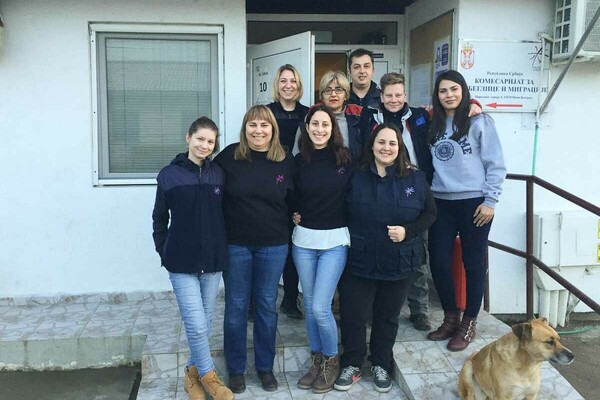
Belgrade, Serbia
This graduate student project examined the complexity of migration by comparing experiences of transitory refugees encamped in Serbia and Kenya, investigating patterns of integration and exclusion of encamped and transitory refugees within their host communities. Engaging with biological and human cultural concepts, the project sought to understand how refugees, who survived wars, cope with the immense changes brought by forced displacement while struggling to restructure their identity and place at both individual and collective levels. The project aimed to contribute to scholarship on forced/transitory migration and general refugee phenomena, specifically the process of integration, community building, and policies that respond to these crises.
Faculty Advisor: Rahul Oka
The student traveled to France and Spain to analyze three Latin manuscripts of the Colección in order to advance scholarship on the Arabic collection’s origins and the broader circulation of legal knowledge in medieval Iberia. The Colección Canónica Hispana is a Latin collection of canon law that has been translated into Arabic and is the the only surviving legal source from Andalusi Christians themselves. Using this document, the student provides new insights on the legal culture of the Christian communities residing under Muslim rule in Al-Andalus.
London, England
This undergraduate winter break project explored the effects of the Trump administration’s steel and aluminum tariffs on the United Kingdom and the policy responses of the UK in retaliation. The project analyzed the tariffs’ overall and local impacts on the UK economy, as well as the effects of the UK’s legislative response on their economy and the US-UK trade balance.
Faculty Advisor: Mitchell Olsen

Reykjavik, Iceland
This undergraduate summer break project studied the deterrent effect of strict government financial regulation on risk-taking in retirement investment by administering an experimental survey to Icelandic citizens. The survey sought to answer whether, and to what extent, stronger financial laws and judicial action change public financial risk preferences.
Faculty Advisor: Jason Reed, IV
London, England
Most scholarly work on slam poetry examines the competitions within the context of only one country, out of conversation with other countries’ slam poetry culture. This undergraduate winter break project for an English Honors thesis explores the role of the poet and audience in slam poetry in two countries, the United States and the United Kingdom, to compare how these elements interplay in both countries’ cultural contexts.
Faculty Advisor: Susan Harris
The student investigated how regulation of the fashion industry could drive progress on sustainability targets outlined in initiatives such as the European Green Deal, UN 2030 Sustainable Development Goals, and Paris Agreement. Focusing on Europe as the first region to collectively implement policies in this sector, the research aimed to evaluate the roles of governmental and private stakeholders. A comparative analysis between Italy, facing challenges, and Denmark, showing early success, provided valuable insights into effective strategies for sustainability in the fashion industry.

As a Brazilian international student fluent in Portuguese, Leticia Cardoso is fascinated by the intersectionality of migration, economic development, and labor market dynamics. At Notre Dame, she studies Business Analytics, Global Affairs, and European Studies, and she is constantly intrigued by Portugal’s impressive first-place ranking in the Migration Integration Policy Index (MIPEX) for labor market mobility. MIPEX assesses the effectiveness of policies designed to promote migrant integration across various dimensions, including labor market access. This outstanding rating reflects the country’s commitment to fostering an inclusive environment for immigrants, particularly those from former colonies like Brazil. Yet, although shared language and cultural similarities can ease cultural assimilation, Cardoso suspects that other significant factors may hinder migrants from effectively navigating the labor market. By assessing the broader socio-economic landscape that shapes the experiences of migrants, she conducted an independent research project to evaluate Portugal’s strategy towards effective integration policies.
Cardoso’s research project was guided by the following question: What mechanisms have facilitated the integration of migrants from former Portuguese colonies into Portugal's labor market? Her research methodology utilized a mixed-methods approach, focusing on literature review, statistical data analysis, and targeted fieldwork in Porto, Gaia, and Lisbon of Portugal. Before departing for Portugal, she drafted a thorough literature review to assess existing academic research and policy documents related to migration from former Portuguese colonies to Portugal. The final review encompassed studies on integration mechanisms, economic contributions, and social dynamics within migrant communities. Next, Cardoso employed statistical data analysis to examine trends related to employment, wage levels, and industry participation of migrants from former colonies. This quantitative analysis supported the identification of patterns in labor market integration, helping to assess the economic contributions of these migrant groups. To enhance the research's authenticity and relevance, the project included targeted fieldwork, focusing on engaging with policymakers and organizations involved in migrant integration. This direct engagement provided insights into the effectiveness of current integration policies and practices, as well as identifying gaps and opportunities for improvement.
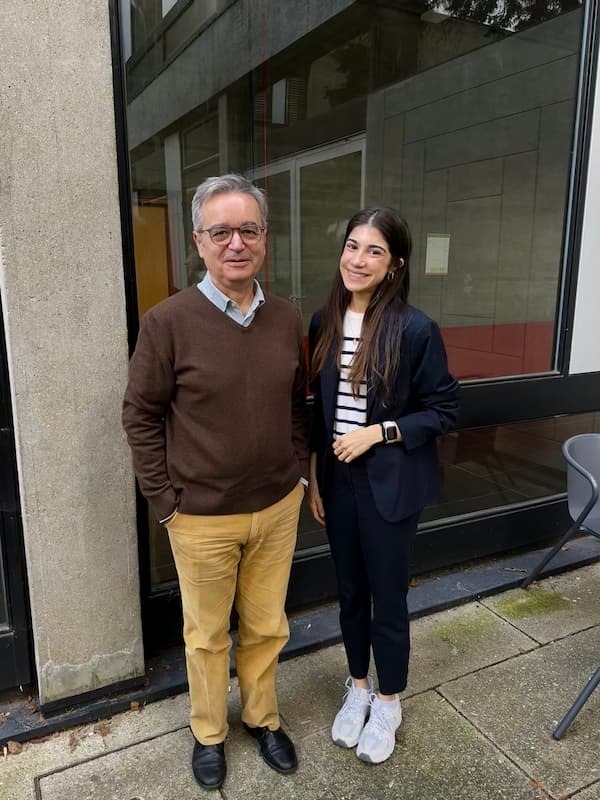
Ultimately, Cardoso’s research sought to enhance the discourse on migration and integration in Europe, offering valuable insights that can guide policy decisions and foster a more inclusive society. By highlighting the contributions of migrants from former colonies, her project supports the Nanovic Institute’s mission to address critical global challenges through interdisciplinary research, emphasizing the importance of integrating diverse perspectives in shaping effective migration policies. As she applies her research to her senior thesis for Global Affairs, Cardoso is eager to contribute to a broader dialogue on these critical issues, with a clearer understanding of the pressing needs and potential solutions for migrant communities in Europe.
London, England; Madrid, Spain; Rome, Italy
Public spaces in urban environments have historically played a crucial role in developing democratic political cultures, giving people places to interact with each other in political demonstrations, conduct business, or share leisure—places in which they develop civil society. This undergraduate summer break project examined the precautions raised in public spaces following terrorist attacks which make public spaces less welcoming, or at worst hostile. The project documented temporary obstacles found in public spaces in London, Madrid, and Rome, and aimed at developing empirically-based solutions for guaranteeing public safety in urban environments.
Faculty Advisor: Ingrid Rowland
Norway; Sweden; Denmark; Netherlands
This faculty grant supported research for Sophie White’s third book, The Other “One-Percenters”: A Deep Cultural History of Redheads, a cross-disciplinary history of redheads. Centered around Europe and the European diaspora, the book integrates genetic and demographic analyses of the redhead gene within a study underpinned by theories of race, discrimination, and gender to weave a cultural history of redheads in art, literature, popular culture, mythology, and science.
The student successfully conducted research on migration and political rhetoric surrounding migrants in Italy. This research significantly contributed to their senior thesis on the construction of political narratives surrounding migration in the United States and worldwide. Additionally, the student organized relevant meetings with academics and non-profits, and volunteered at the Joel Nafuma Refugee Center in Rome, enhancing their understanding of the topic.
Madrid, Spain
This undergraduate summer break project explores the still contentious end of Francisco Franco’s dictatorship in Spain, particularly the Pacto del Olvido (“Pact of Forgetting”) where the left and right agreed to not relitigate the Civil War and Franco era. The project specifically focuses on whether Spain’s recent suffering under a right-wing dictatorship dissuades the rise of a powerful right-wing populist party, and how Spain’s situation with respect to its past compares with other European countries that suffered similar trauma in the twentieth century.
Faculty Advisor: Andy Gould
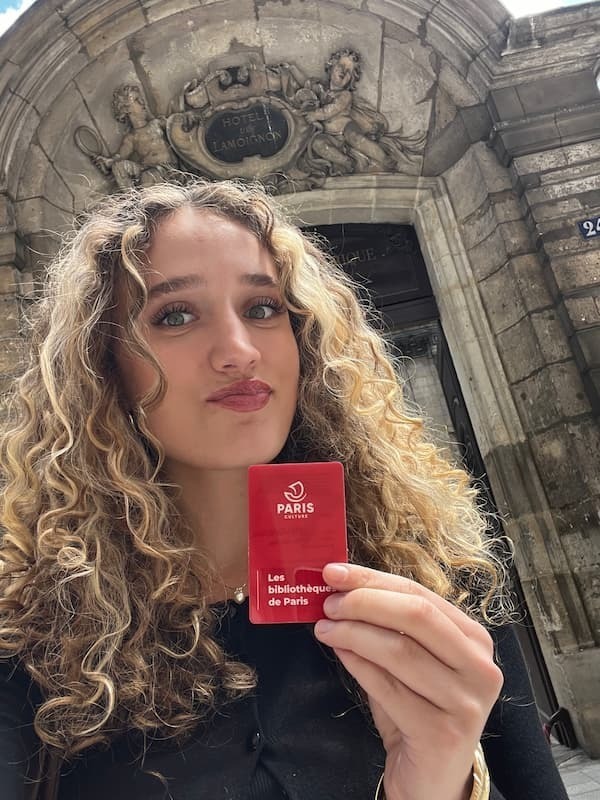
With support from the Nanovic Institute, the Notre Dame Stamps Scholars Program, and Dr. Anne Seul, Lichtenberger’s research project sought to analyze immigration-related policies and public perception of immigration in Paris, France. Having attended a French school for almost a decade as well as nurtured a long-standing interest in immigration policy, she was drawn to examine how French colonial history, particularly the 20th century, reverberates through modern immigration frameworks. Specifically, she hoped to explore the following: How does France’s colonial history shape contemporary immigration policies and public perceptions of migrants in Paris, and how do these historical influences manifest in the lived experiences of immigrant communities today? Her guiding question pertained to examining how France receives migrants (primarily measured through comparing written policy and policy implementation) and, secondarily, how public perception of migrants has evolved and what factors may have contributed to this trend. Understanding that colonial legacies are essential for analyzing modern immigration flows, policies, and public attitudes, Lichtenberger sought to explore post-colonial migration patterns that have shaped the demographic and cultural landscape of Paris.
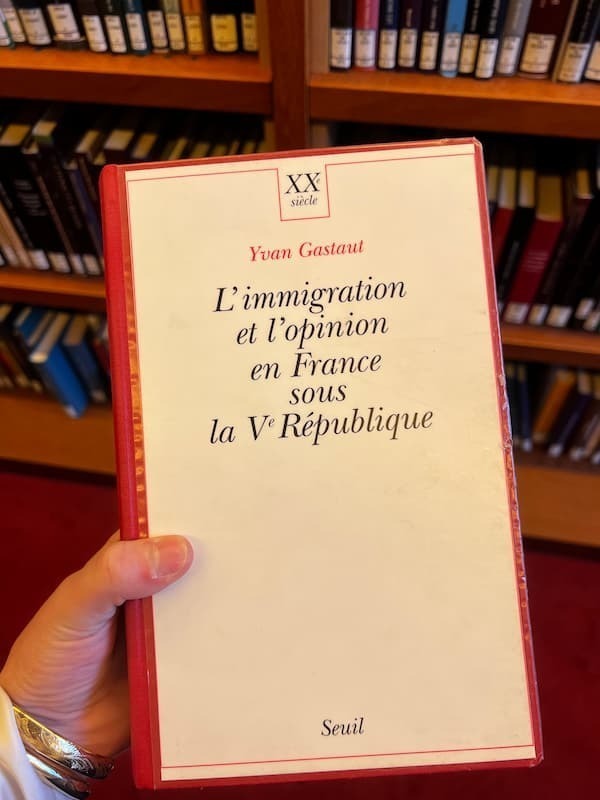
While in Paris, Lichtenberger conducted museum-based research at sites of “living texts”: Musée de l'Histoire de l'Immigration (Museum of the History of Immigration), Musée de Paris (Musée Carnavalet), Musée du Quai Branly – Jacques Chirac, and Palais de la Porte Dorée. She also conducted archival research at the Bibliothèque Historique de la Ville de Paris (BHVP) and BnF - François Mitterrand. By carefully comparing historical documents, academic books, policy records, and museum exhibitions, she traced how colonial relationships continued to influence integration policies, spatial segregation, and national identity long after formal decolonization. Lichtenberger’s key takeaway from her research was the significance of preservation and presentation of information in historical narratives: “The silences, omissions, and curatorial choices often spoke just as loudly as the facts themselves.” Across various archival spaces, differences in representation of historical events pushed her to think critically about how memory is constructed, who gets to tell the story, and how institutions shape collective understanding through what they choose to preserve, and what they leave out.
Housing is fundamental to well-being through various channels, including access to decent shelter, healthcare, environmental quality, efficient use of scarce resources, and the type and extent of commuting. However, the housing crisis, which manifests differently across the globe, threatens many livelihoods. Afro-descendent and immigrant communities on the peripheries of London and Lisbon are disproportionately impacted. This capstone project investigated the political constraints to housing policies addressing the fundamental problem of supply. The trend of commodifying housing as an asset rather than recognizing it as a right creates a system of winners and losers.
This research engaged with the deeply structured political realities that perpetuate disadvantaged economic and social institutions, as well as policies that adversely affect the economic and physical well-being of racially and economically marginalized groups. From a historic and comparative perspective, the project identified opportunities to rectify path dependencies and reform housing policies.
Washington, District of Columbia
This graduate student project explored documents related to Italian writer Primo Levi, a scientist and Holocaust survivor, to understand how Levi’s works are influenced by the dominant Anglophone culture of the post-war era. The project conducted archival research on early chapters of Levi’s If This is a Man at the United States Holocaust Memorial Museum as well as study of the presence of British prisoners in concentration camps, particularly Auschwitz.
The student traveled to various locations in Europe to speak with experts and interview people of relevance regarding sanctions on Russia. The student also plans to do statistical analysis with the interviews. Sanctions can be a deterrent; they can also be a gamechanger if their preventative aim fails. Given the unprecedented level of sanctions against Russia due to its invasion into Ukraine, it is important to understand what their main role is, and whether the sanctions are capable of achieving their objectives. However, there is little research of the potential impact of not applying stricter sanctions. We can quantify how much an energy embargo would cost Germany and other nations. Yet, what would be the cost of not imposing it given that it will keep on funding the Kremlin and enable prolonging the Russian war? This scenario is likely to increase the refugee flow of Ukrainians and further destabilize the global economy, and this will also increase the cost for European neighbors.
London, England; Helsinki, Finland
This undergraduate spring break project examined strategies for addressing homelessness in three countries—the United States, the United Kingdom, and Finland—and their outcomes. The project analyzed quantitative factors, like success rates and program costs, as well as qualitative factors, like personal narratives and satisfaction with each system.
Faculty Advisor: Fr. Khaled Anatolios
The student traveled to Istanbul to conduct archival research on the revolt of the Zealots in Thessalonica in 1347 against which Emperor Kantekouzenos sought the help of the Aydinid Turks, the joint rebellion of the Byzantine and the Ottoman princes against their fathers in 1373, and the revolt of Sheikh Bedreddin in 1416 that brought Christian and Muslim peasants of the Balkans under the same banner against the Ottoman ruling elite. The project aims to examine the role that the Turks played in the shaping of modern European identity, as previously, they have been dismissed as an imaginary other. The research demonstrates that the socio-political transformation of Asia Minor and the Balkans was by no means only a product of a struggle between different polities of the region but also a product of the continuous struggle between rebellious subjects and ruling elites, a struggle that often brought “hostile” ruling elites together. In doing so, this project ultimately seeks to better understand the social and political implications of the large-scale migration of the Turkic tribes into Asia Minor and the Balkans.
The student traveled to southern Spain to study how the design of mosques are integrated with the urban landscape. This project aims to focus on the following three inquiries: 1) What inspired the location and placement of the mosque in the city? 2) What resulted from the placement of the mosque and what kind of buildings (such as palatial, educational, residential, and commercial) emerged within its circle? 3) How did the mosque respond to the cultural and ecological condition of its place? The student then hopes to apply these insights to inform the design of mosques in America.

"In Italy, leadership is often a family affair, but every so often, someone breaks the mold." While browsing Roman archives, Mittle stumbled upon this quote that perfectly aligned with a question she had been eager to explore: How does a country with one of Europe’s lowest levels of women’s political participation achieve historic female leadership? Last winter, Mittle pursued this academic interest by conducting research in Italy for a project titled Against the Odds: Italy’s Success in Female Leadership Despite Low Women’s Political Participation. With the support of the Nanovic Institute and Susan Ostermann, she traveled to Rome, Milan, and Florence to investigate the paradoxical rise of female leaders in Italy against a backdrop of deeply rooted traditions and underrepresentation at local levels. This paradox of successful female leadership at the top levels, despite low overall women’s political participation, raised the following question: Which social, cultural, and political dynamics have enabled women to reach top leadership positions in Italy despite the country's gender disparities in political participation?

To support her research, Mittle visited numerous sites that have preserved the history of women in politics. In Rome, she visited the Italian Association for Women in Development (AIDOS), Museum of Women, Historical Archives of the Chamber of Deputies, and the American Academy in Rome. In Florence, she explored the Salvatore Ferragamo Museum, Palazzo Pitti, and the Uffizi Gallery. During her stay in Milan, she ventured to the Museum of Women and Libreria Delle Donne. From admiring showcases of female business attire to exhibits tracing the history of women’s suffrage, Mittle appreciated each narrative's ability to convey how deeply cultural perceptions influence women’s leadership trajectories.
Immersing herself in Italian culture to study a two-hundred-year timeline of women’s political participation has done more than deepen one of Mittle's current academic interests. Reminded of her commitment to advocating for gender equality in politics worldwide, her research in Italy has encouraged Mittle to broaden her senior capstone to a comparative case study between Indian and Italian politics.
Quietly, and in some ways unnoticed, the small farms and historical life of rural Europe are quickly disappearing. Relevant to the European Union, Hugh Thomas (2017) asks the hard question: “Could the small, family farm all but die out in the next 30 years?”. Rural areas in Europe host more than 55% of the overall population, are defined by unique and specific cultural and natural heritage, and yet are rapidly being abandoned. Over the last 20 years young people have flocked to European cities, given up on family farms, with farms abandoned in less productive areas and absorbed by huge agri-food business (Harvey 2021). Intensification, with the abandonment of small-holding farms has been driven by the European Union’s common agricultural policy (CAP) which has dominated Europe’s farming since being introduced in 1962. Discussing the European Union’s common agricultural policy (CAP) EU agricultural commissioner J. Wojciechowski stated “The reason we lost 4 million farms in the EU was a mistake in the CAP. The support was too much to industrial farming and not enough to small and medium farms.”
The abandonment of European rural farm life is often framed as an economic and policy problem. Harvey’s (2021) observation that “…. there has been a huge intensification of farming and that small farms have been lost”, mask a horrible loss of heritage, history, and importantly, small-scale rural ways of life. Overlooked in abstract conversations is the hidden and very human dimension of the abandonment of small-scale household farming. Farms, barns, and farmsteads are places of regional and national history, speaking to historical past. There is the need to understand the overlook and hidden rural world, the commonalities and contrasts of the European rural life in the face of agro-buisness, the on-going transformative process of rural change in different countries, and how this process speaks to the past and future.
Athens, Greece
This graduate student project examined Greek political theory involving the tensions of intergovernmentalism and supranationalism and the discontinuities that create new identities. The project illustrated these tensions through the contemporary debate between two major modern Greek philosophers, Christos Yannaras and Stelios Ramfos, and various ancient Greek philosophers. The project sought to inform a dissertation on the subject, improve Greek language skills (in both Modern and Ancient Greek), and prepare materials for interviews with Yannaras and Ramfos.
Turin, Italy; Munich, Germany; London, England
This undergraduate summer break project investigated the processes that led to the incredible marketization of football club sponsorship deals, focusing on stadium naming rights and jersey sponsorships. The project interviewed locals to gauge the attitudes of average consumers as well as executives to gain information about the impact of sponsorships on consumer preferences.
Faculty Advisor: Chris Stevens

London, England
This graduate student project investigated the role of the British Empire in fomenting capitalism in the Indian Ocean region, and British commercial and political activities in the Persian Gulf, particularly with Oman. The project sought to uncover how Britain used its commercial, military, and political alliance with Oman to consolidate its power over the Persian Gulf, the Strait of Hormuz, and the ports of Zanzibar and Muscat. The research collected in the project informed a dissertation rethinking the emergence of capitalism and modernity in the Indian Ocean.
Faculty Advisor: John Deak
The student successfully completed a comparative project between the French and American healthcare systems. While already studying in Angers, France, they traveled to Paris to spend time at the Museum of the History of Medicine and the Bibliotheque Nationale, which houses several key texts on the development of the public health system in France. This research significantly contributed to the student’s future career goals as a healthcare practitioner.
The student traveled to the United Kingdom to conduct research at various archives on women’s organizations in the early twentieth century. The student’s research centers on women’s work and organizations, looking for how Catholic women understood gender roles and how anti-Catholic rhetoric was used to suppress work like labor and rights organizing. A significant portion of this research focuses on middle-class and elite converts to Catholicism, delving into questions about why these women chose to enter the Catholic Church at the height of anti-Catholic sentiments, how they constructed their faith independent of the influence of Catholic men, and how they understood their citizenship in Protestant nations. By expanding to consider the experiences of women outside of the U.S., the student draws out similarities and differences between how Catholic women in both nations negotiate their citizenship and identity in societies where they experienced anti-Catholicism.
The student conducted research in London over the summer for their History Honors thesis senior year. The research focused on studying the history of cabinets of curiosities in Britain, with special attention to the 19th century when these cabinets influenced the formation of Victorian-era museums like the Victoria & Albert Museum.

