Rüdiger Bachmann
Email: rbachman@nd.edu
Affiliated Scholar 2025-26
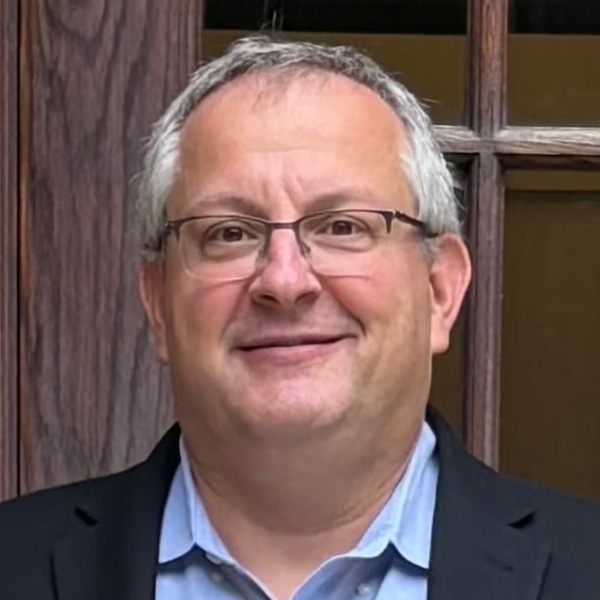
Rüdiger Bachmann is a professor of economics in the Department of Economics at the University of Michigan in Ann Arbor. He is a research fellow at the Centre for Economic Policy Research (CEPR), a research fellow of the CESifo research network, an IZA research fellow, and an external research professor at the ifo institute in Munich. He is also a member of Atlantikbrücke e.V.
Prior to joining the University of Michigan in 2025, where he teaches undergraduate and graduate macroeconomics courses, Bachmann was a Stepan Family College Professor of Economics in the Department of Economics at the University of Notre Dame. He remains an affiliate scholar with the Nanovic Institute for European Studies at Notre Dame. Before joining the University of Notre Dame in 2014, he was a full professor (W3) of behavioral economics and finance jointly at Goethe University and the Center of Excellence “Sustainable Architecture for Finance in Europe” (SAFE) in Frankfurt; the chair of economics, in particular Macroeconomics (W3), at RWTH Aachen University; an assistant professor of economics at the University of Michigan; and a visiting (assistant) professor at the University of Pennsylvania, the University of Michigan, Harvard University, Boston University, and Yale University. Bachmann received his undergraduate degrees in Economics and Philosophy from Mainz University, and his Ph.D. from Yale University in 2007. He is also a member of the editorial board of Perspektiven der Wirtschaftspolitik and a member of the macroeconomics committee of the German Economic Association. He has advised the German federal government and members of parliament on several occasions. He has written articles for major German newspapers, given interviews to them, and appeared multiple times on German radio and national TV. He hosts a podcast on economic topics with fellow economist Christian Bayer and journalist Holger Klein called Wirtschaftskunde (in German).
Bachmann’s research area is macroeconomics, specifically the macroeconomics of heterogeneous agents. He is particularly interested in the formation and perception of uncertainty, as well as expectation formation, and their effects on micro-level and macro-level outcomes. Another important aspect of his research is policy evaluation. He uses econometric tools from empirical macroeconomics, as well as numerical simulation techniques, in his research. He has also branched out into using surveys, especially firm surveys, to address macroeconomic questions. Bachmann became known to a wider audience in 2022 through his policy brief “What if? The Economic Effects for Germany of a Stop of Energy Imports from Russia”, in which he and his coauthors argue that Germany, in the wake of Russia’s attack on Ukraine, could wean itself off Russian natural gas imports without facing economic disaster.
Bachmann’s research has been published in the American Economic Review, the Journal of the European Economic Association, the Journal of Monetary Economics, the American Economic Journal: Macroeconomics, the American Economic Journal: Economic Policy, the International Economic Review, the Review of Economic Dynamics, the Journal of Money, Credit and Banking, the Journal of Economic Dynamics and Control, the European Economic Review, Economica, Quantitative Economics, Economics Letters, the Journal of Mathematical Economics, and Economic Theory.
Rüdiger Bachmann is married to Ying Fan, who is also a full professor of economics at the University of Michigan. They live in Ann Arbor, Michigan, and have two children.