
Unveiling the Climate Apocalypse
An undergraduate student project and multimedia exhibition
An introduction by Dani Fielding and Jane Palmer
What is an apocalypse?
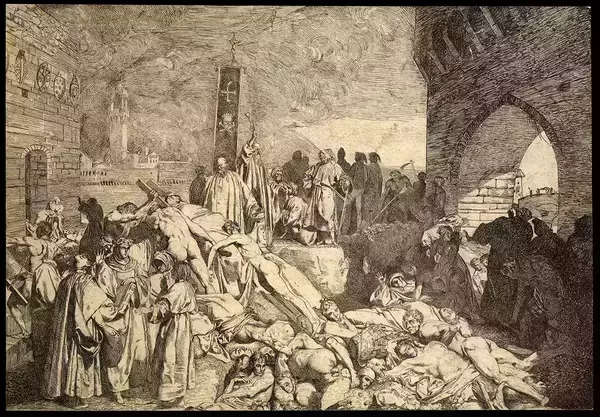
Is it the fiery end foretold in Revelation, where the sky cracks open, the seas boil, and the earth is swept clean of sin? Perhaps it comes in the form of divine judgment, as many medieval Europeans believed, as a reckoning that arrives in the form of plague or famine and punishes humanity for its excesses? Or is it, as the Romantics thought, when nature rises in chaos, sublime and unstoppable, to reclaim the world from human hands?
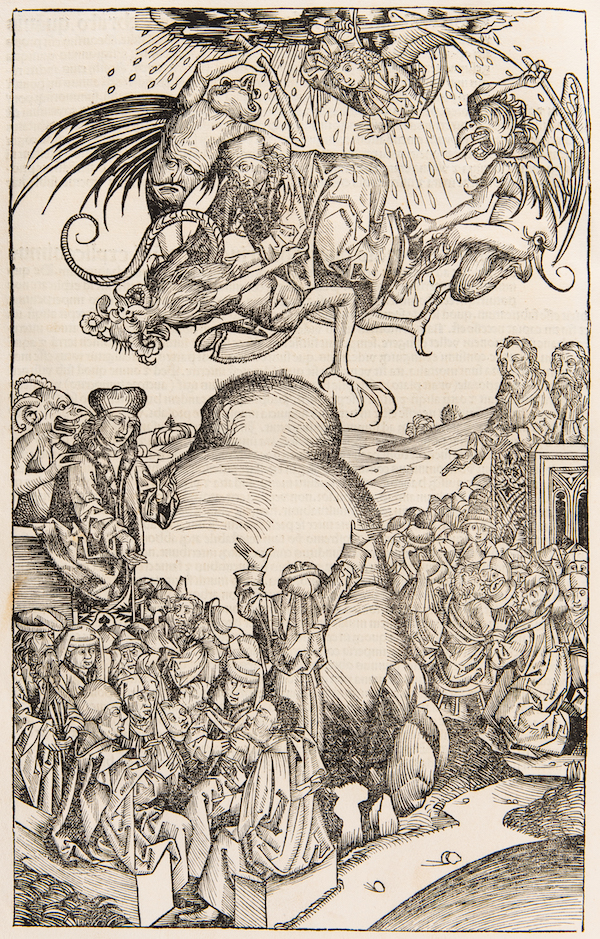


Whatever the answer, it is clear that throughout European history, the Apocalypse has evolved, taking myriad forms, to reflect society’s greatest fears, deepest truths, and loftiest aspirations. It is clear that it has been an ever-shifting narrative perpetually shaped not just by the anxieties of its time, but also by the hope (or promise) of transformation—of a world purified, made just, harmonious, and new.
It is for this reason that traditional Eurocentric apocalyptic narratives tend to be somewhat poetic imaginings—that they so often feature dramatic reversals, sweeping destruction, and are rife with moral and spiritual significance. Consider Revelation, for example, when fire and brimstone rid the planet of all life and deliver justice with a terrifying finality:
“And the first angel sounded the trumpet, and there followed hail and fire, mingled with blood, and it was cast on the earth, and the third part of the earth was burnt up, and the third part of the trees was burnt up, and all green grass was burnt up.” (Revelation 8:7).
From divine reckonings and plague-ravaged cities to Romantic visions of nature’s sublime revenge, the “end of the world” has never just been about annihilation; it has always been about revelation, about what is laid bare in the moment of collapse. Here, the Apocalypse is a theatrical display of cosmic order asserting itself, and, while the imagery is visceral and violent, we also know that Revelation does not end in ruin, but in the creation of a “new heaven and a new earth” (Revelation 21:1).
But not all apocalypses come with trumpet blasts, fiery horsemen, and a world made new. Sometimes, they unfold quietly and more insidiously—sometimes, they are the slow erosion of what we once believed to be permanent, until the world we’ve known is irrevocably altered.
Unveiling Meaning
The word “apocalypse” originates from the Greek word “apokálypsis” (ἀποκάλυψις), which translates to “revelation” or “unveiling.” Reaching back to this original meaning, an apocalypse is not necessarily a moment of destruction. It can be a moment of new understanding. In the context of this project, an apocalyptic exploration of the climate crisis may not always signal doom. It can reveal deeper truths about how we live, what we value, who is most vulnerable, and what systems have failed. That apocalyptic “unveiling” becomes a moment of reckoning and potential transformation.
The artworks in this exhibition do not simply document a crisis—they expose its emotional, moral, and political dimensions. They challenge us to confront the scale of the threat while holding space for imagination, resistance, and care.
This Exhibition
Unveiling the Climate Apocalypse, this year’s research exhibition, examines this quieter, ongoing unraveling. While we often associate apocalypse with the past, with myth and prophecy, this project asks what it means to live within one.

Drawing from European artists and perspectives—historically, artistically, and politically—this exhibition explores how narratives of apocalypse continue to shape the way we perceive, fear, and respond to ecological destruction. Europe offers a particularly revealing lens; as both a site of industrial origins and cultural mythmaking, it is deeply implicated in the structure that produces our present moment, while home to artists and thinkers grappling with the legacy of those very systems. Apocalypse can be destructive, or it can be a moment of rebirth and change. It can be a sudden moment of frenzied action, such as the chaotic crowds depicted in Brullov’s “The Last Day of Pompeii.” But it can also be gradual, subtle, like Nixon’s “slow violence… a violence that occurs gradually and out of sight, a violence of delayed destruction that is dispersed across time and space.” Such is the nature of the climate crisis.
Each student in this project has taken up a different artwork that addresses the climate apocalypse in distinct ways—through street art, installation, interactive design, photography, video games, or activism. While the mediums vary, each work asks us to see, feel, and think differently about the world’s fragility and our place in it.
If apocalypse once meant “unveiling,” then perhaps that is where its power still lies. Not in forecasting final destruction, but in revealing what we have failed to see and what we still might save.
This exhibition invites you to consider those questions through the eyes of artists, scholars, and students who together are grappling with one of the most urgent realities of our time.
We invite you to sit with those revelations and to ask, together, what comes next.
End Notes
-
Revelation 6:12-14 (DRB): “And I saw, when he had opened the sixth seal, and behold there was a great earthquake, and the sun became black as sackcloth of hair: and the whole moon became as blood: And the stars from heaven fell upon the earth, as the fig tree casteth its green figs when it is shaken by a great wind: And the heaven departed as a book folded up: and every mountain, and the islands were moved out of their places.”
-
Philip Ziegler, The Black Death (Harper & Row, 1969). This work discusses how medieval Europeans interpreted the bubonic plague as divine punishment for humanity's sins, a belief reinforced by religious sermons and chroniclers of the period. See also: John Aberth, From the Brink of the Apocalypse: Confronting Famine, War, Plague, and Death in the Later Middle Ages (Routledge, 2001).
-
Edmund Burke, A Philosophical Enquiry into the Origin of Our Ideas of the Sublime and Beautiful, 1757. Burke describes the Romantic fascination with the sublime, particularly the terrifying power of nature. See also: Klaus P. Mortensen, The Apocalypse in English Renaissance Thought and Literature: Patterns, Antecedents, and Repercussions (Manchester University Press, 1985).
-
Rob Nixon, Slow Violence and the Environmentalism of the Poor (Harvard University Press, 2011), 2.
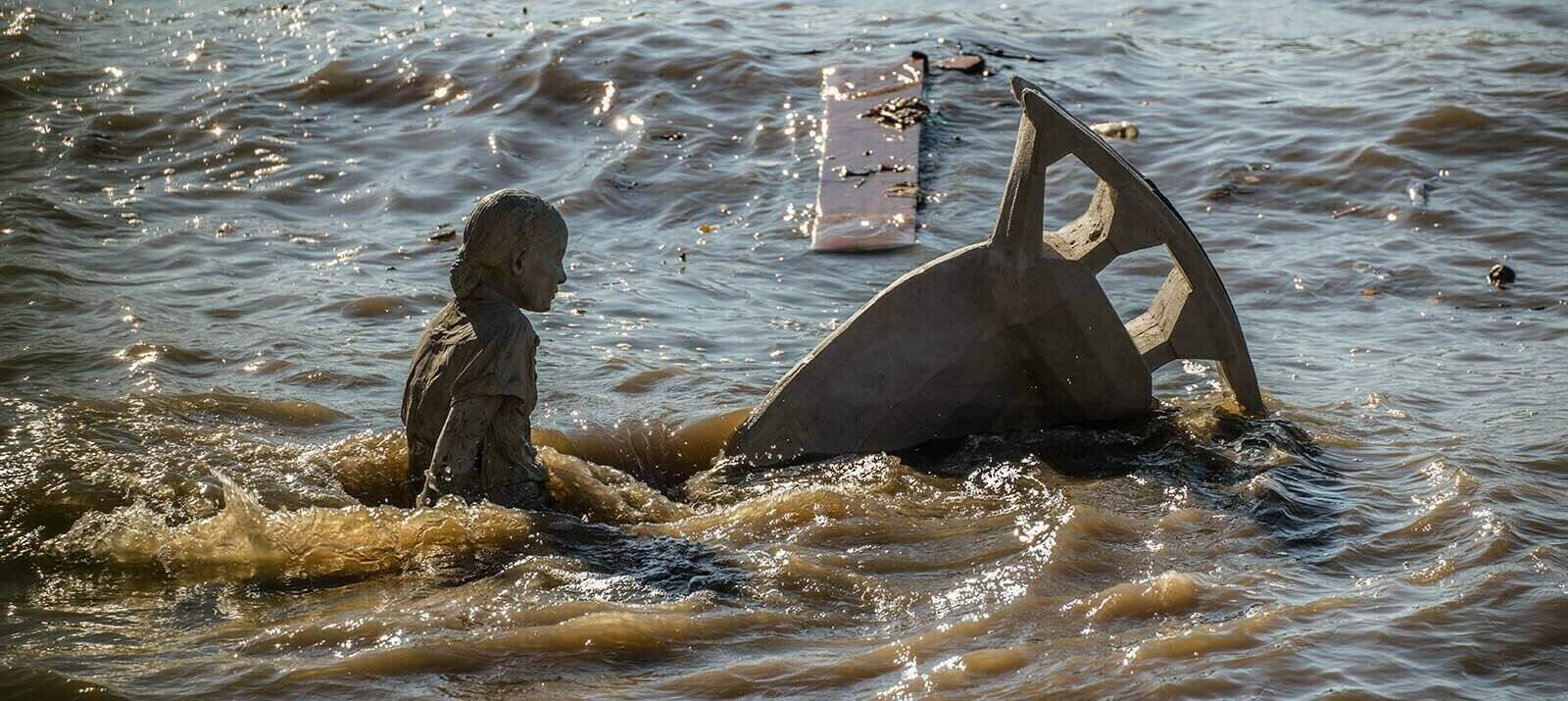

Submerged Realities: Concreting the Threats of the Climate Apocalypse
By: Anna Massman
In this piece, Anna Massman examines how British sculptor Jason deCaires Taylor utilizes his evocative underwater and tidal sculptures to confront the threats of the climate apocalypse and provoke public discourse. She analyzes Taylor's strategic use of apocalyptic symbolism, emotional engagement, and ecological integration to foster awareness, highlight societal responsibilities, and inspire hope for collective environmental action.


Van Gogh-ing, Going, Gone: ‘Crude Oils’ – A Vandalist’s Portrait of Environmental Collapse
By: Catherine Paris
Next in our exhibition, Catherine Paris examines Banksy's 2005 Crude Oils exhibition, detailing how its "vandalized" masterpieces and infamous use of live rats created a provocative commentary on environmental destruction and societal complicity. She analyzes Banksy's success in conveying this urgent message through immersive, discomforting tactics that engage the audience directly, coupled with accessible yet deeply satirical art that forces a confrontation with humanity's ecological impact and the ironies of modern activism.
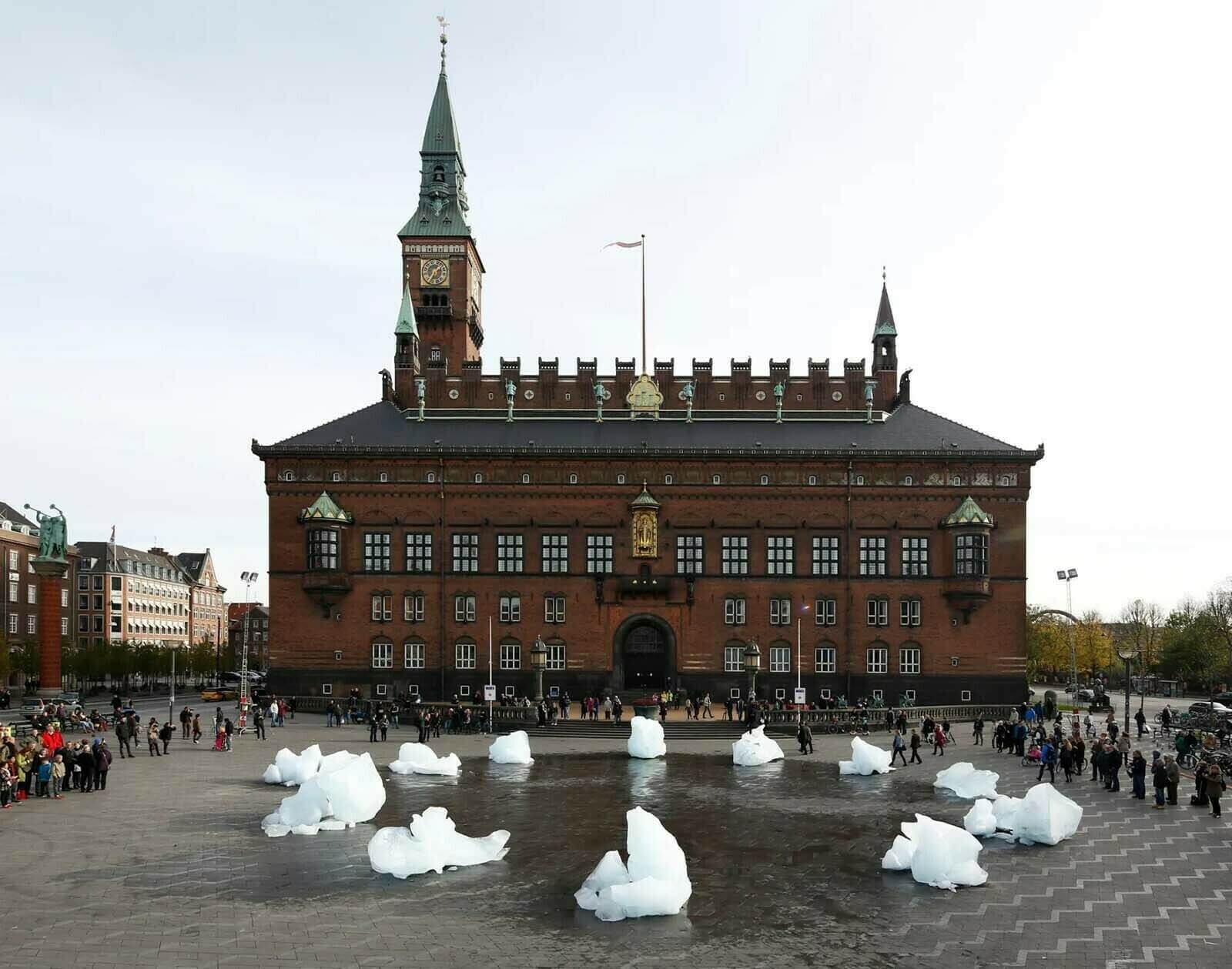

‘Ice Watch’ (2014): A Staged Failure of Integration
By: Dani Fielding
In this piece, Dani Fielding probes Olafur Eliasson's 2014 art installation "Ice Watch," exploring how its confrontational placement of melting Greenlandic ice blocks in an urban center transforms climate change into a visceral, sensory experience. Fielding contends that while the artwork's aesthetic choices make disaster more palatable, it ultimately stages a "failure of integration," highlighting human paralysis and the profound challenge of art to truly represent or spur action against the impending climate apocalypse.
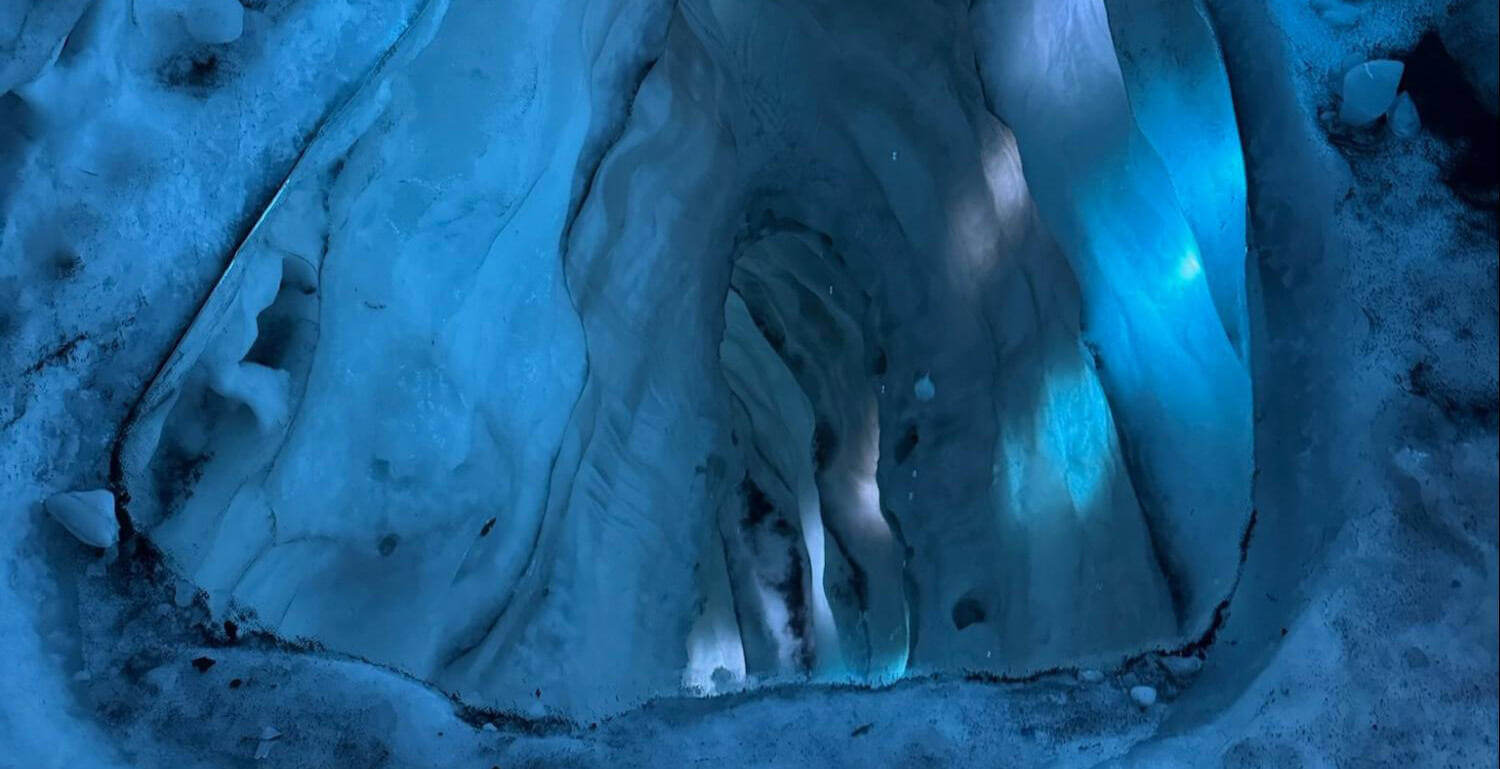

Frozen in Time: How Interactive Exhibits Shape Individual Climate Responsibility
By: Monay Licata
Monay Licata explores how interactive exhibits, using the Perlan Museum's Ice Cave in Iceland as a case study, can foster a sense of individual responsibility in addressing the climate crisis. She contends that by making the abstract threat of climate change tangible and emotionally resonant, such immersive experiences can bridge the gap between awareness and action, cultivating personal agency despite the inherent tensions and complexities of these man-made interpretations of nature.


Anno 2070: A ‘Weird’ Representation of the Apocalypse
By: Dani Fielding
Examining the unique medium of video games, Dani Fielding explores how apolocalypse can be represented in formats that also have a capitalistic goal. In so doing, she enounters three proposed "solutions" for a path forward and questions like what is the role of A.I. in the future of humanity. Her conclusions highlight the "interactivity," an aspect of video games that are unique among apocalyptic media forms, and how this reshapes our understanding of the genre.


Eco-paralysis to Agency: Rewriting the Climate Apocalypse
By: Jane Palmer
To complete our exhibition, Jane Palmer takes us from projecting out the consequences of climate change to imagining a better way forward. What does climate justice look like and how do we overcome "eco-paralysis" to get to a place of action? By looking at the work of Mary Robinson and Caitríona Palmer, Palmer reimagines the vision and points to hope in the midst of impending apocalypse.
Contributors and Researchers: Dani Fielding, Monay Licata, Anna Massman, Jane Palmer, and Catherine Paris.
Project leader and mentor: William Beattie, postdoctoral research associate at the Nanovic Institute for European Studies
Online exhibit by: Keith Sayer, communications program director at the Nanovic Institute for European Studies
Cover image: “The New Jerusalem” scene, panel from the Apocalypse Tapestry, commissioned by Louis I, the Duke of Anjou, and woven in Paris between 1377 and 1382. It is held at Musée de la Tapisserie, Château d'Angers, Angers, France. Public Domain.