‘Ice Watch’ (2014): A Staged Failure of Integration
Dani Fielding

It’s October 16th, 2014. You are in Copenhagen, Denmark, and it’s a day like any other. But as you pass City Hall Square, you are confronted by twelve colossal blocks of ice. You discover that the ice has been harvested from a fjord near Nuuk, Greenland, and it hits you that these fragments carry the weight of the entire planet's history. And yet, each block glistens and drips under the warmth of human proximity, its steady erosion an unspoken countdown.
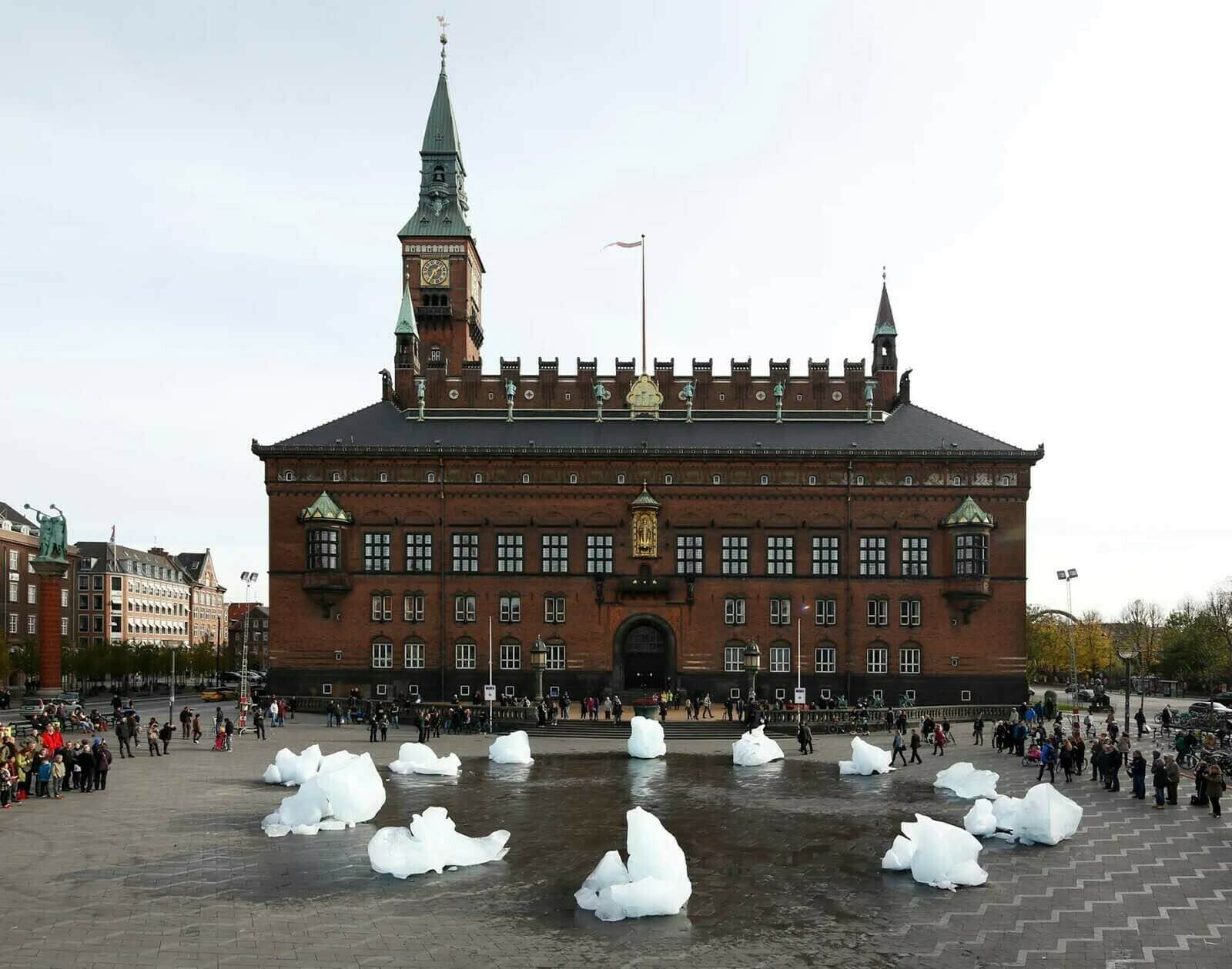
“Ice Watch” (2014) is an apocalypse of the senses, one that makes climate change tangible and immediate in a way that defies its usual abstraction. It confronts viewers in the middle of a busy urban center, where they might watch the ice glisten and drip under the sun, hear the crackling as it melts, and even feel the chill radiating from its surface. Over time, this sensory confrontation intensifies—if they return the next day, passers-by might evaluate whether the blocks have shrunken noticeably, and consider the fact that global temperatures have risen about 2 degrees Fahrenheit since the late 19th century.2 Indeed, its elucidation of the sensorial and the temporal is perhaps the most noticeable thing about “Ice Watch.”
But “Ice Watch” isn’t just an example of sensory apocalyptic rhetoric—like the beautiful but horrifying prose of Revelation, the harrowing medieval depictions of plague, or the awe-inspiring Romantic depictions of natural disaster—it’s also meant to be art. And it is this fact that I am interested in: the way “Ice Watch,” much like these earlier visions of apocalypse, transforms catastrophe into something visually and emotionally arresting, something meant to warn and be experienced.
That might seem like a stretch, but it’s important to consider that the installation was realized by two people, one of whom is an artist, and the other of whom is a geologist with a particular interest in the intersection between geology and art. This distinction matters. Had “Ice Watch” been the work of climate activists alone, we may understandably read it as a call to action, designed primarily to inform or persuade. But because we know it is art, because it is advertised as art, because it is a work that you will explicitly find in Icelandic-Danish artist Olafur Eliasson’s portfolio, it functions differently.
Equally important is something more tangible and visually obvious: the arrangement of the blocks into a circle. The symmetry of the circle is undeniably pleasing to the eye, as it organizes the chaos of melting ice into something vaguely harmonious. It also allows for what may be a more immersive experience—passers-by can “step into” the circle, and view the blocks as they melt from the center. Notably, Olafur Eliasson’s portfolio describes this circle as evoking “clock formation…” meaning that we are explicitly told the aesthetic representation of “Ice Watch” is not only visually functional, but also conceptually functional, in that the “clock” reinforces time as the piece’s central motif.
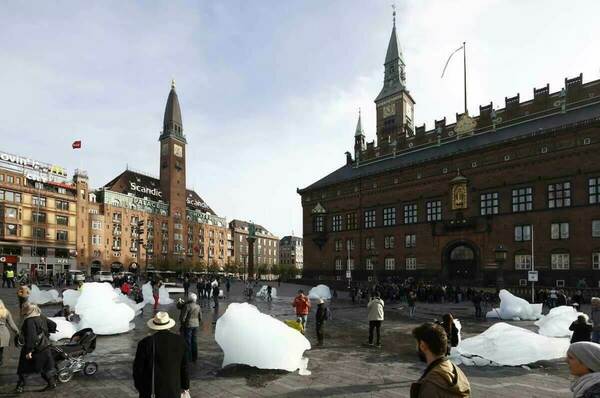
The juxtaposition of the piece is satisfying—the blocks stand in contrast to the rigid geometry of the surrounding architecture, and the transience of it, the way the blocks are not singular, but separate and scattered across the plaza, captivates the eye.
But there is also something unsettling here: the aesthetic choices that reinforce the piece’s message also render it more visually interesting and more palatable to viewers. So, the piece’s form not only mediates its meaning but, in an important sense, is perhaps the only reason meaning is ever received.
I think “Ice Watch” speaks to the tendency to aestheticize even the most devastating truths—without the symmetry, without the visual harmony—if “Ice Watch” had been chaotic, messy, and purely utilitarian—would the melting blocks still hold our attention, and would it still be art in our eyes? Or does its rhetorical power depend on its ability to strike a balance between beauty and tragedy, drawing us in even as it implicates us? Perhaps we can never truly know; perhaps the ice would be even more striking, feel even more displaced, and be even more distressing, if it had been situated more organically—scattered across the Square like debris, or stacked haphazardly as if broken from a melting glacier. It is hard to say.
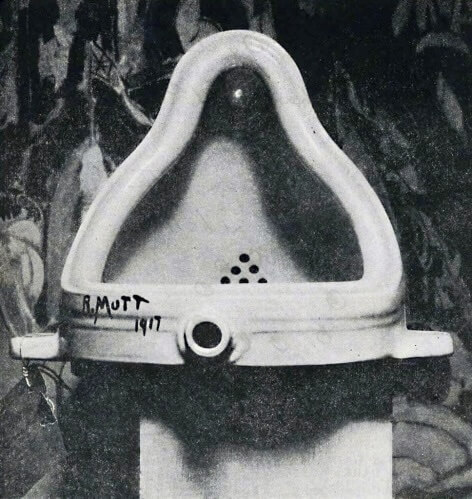
But beyond these speculative arrangements of “Ice Watch,” it’s important to note that, in Western society, aesthetic representation and function have almost always been inseparable in the conception of what art is and what it should do. Even movements that ostensibly rejected traditional aesthetic frameworks, like Dada or abstract expressionism, relied on intentional choices in form and presentation to provoke emotion and thought. Marcel Duchamp’s “Fountain,” for instance, was a utilitarian object—a urinal. Though the object itself was not traditionally “beautiful,” by placing it in a gallery, reorienting it, and signing it, Duchamp transformed the urinal into something that could provoke aesthetic contemplation. As Hopkins (2009) notes in A Companion to Dada and Surrealism, such acts of recontextualization were central to the Dadaist approach; even when “aesthetics” were rejected, decisions regarding form and presentation still shaped artistic meaning.4
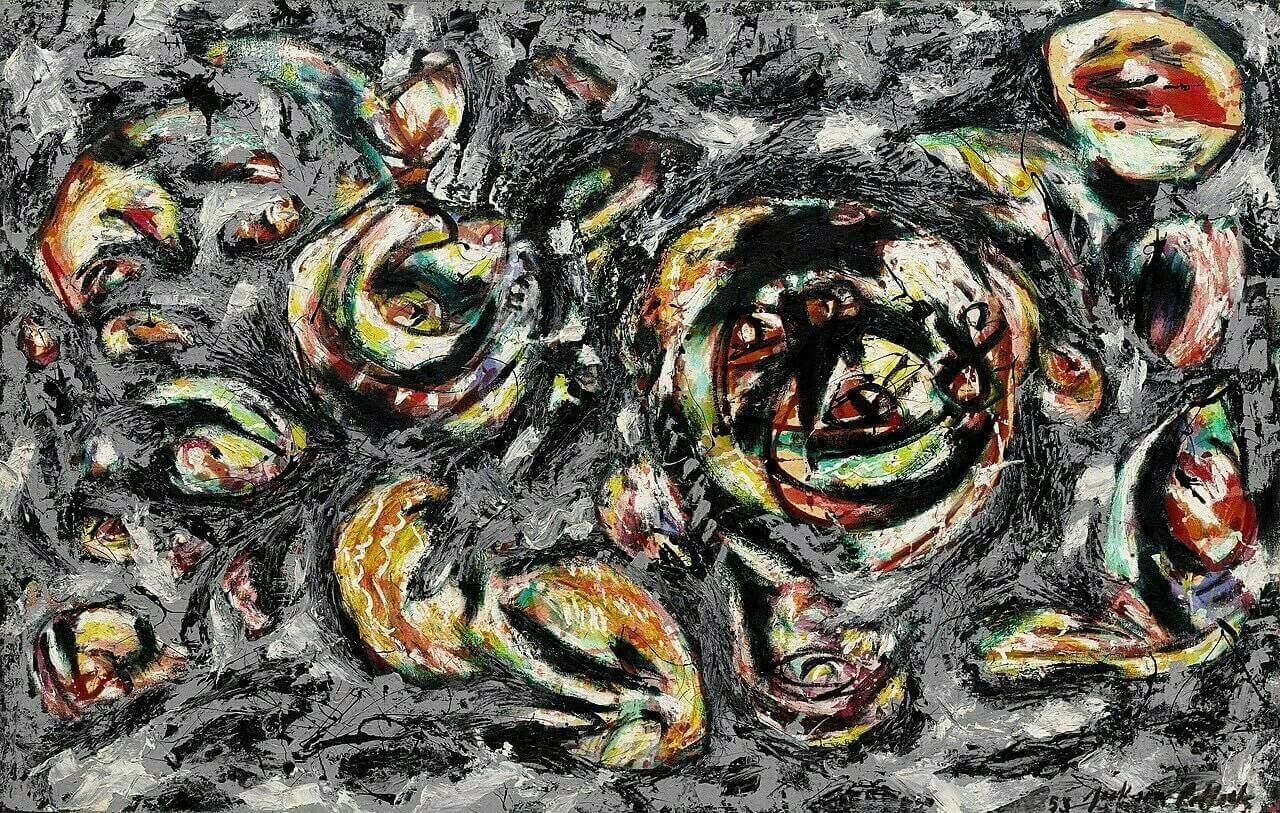
Similarly, while Jackson Pollock, a pioneering figure in abstract expressionism from the mid-20th century, rejected traditional notions of representation such as figuration and narrative clarity, his art was far from random. Each flick, drip, and splash of paint in his signature “drip technique” was the result of a deliberate physical choreography, with Pollock often adjusting his movements to influence the distribution and density of paint. This method produced compositions that, while chaotic in appearance, maintained a sense of balance, rhythm, and directional flow that guided the viewer’s gaze in intentional patterns. A machine vision study by Taylot et al. (2015) goes so far as to identify a “Pollock-like order” and consistent mathematical complexity in the fractal geometry of his works.5
More succinctly, art, even in its most radical forms, depends on the ability to manipulate aesthetics, and “Ice Watch” is no exception here.
So, what does that say about “Ice Watch” as a form of apocalyptic rhetoric and as an artistic project?
It suggests that art like “Ice Watch” operates in the realm of performance as much as it does in the realm of critique. Yes—the ice melts before our eyes, and our role as spectators implicates us—but there is also, in the current moment, nothing to do about it. The work unfolds with or without our consent, and our presence changes nothing, except perhaps hastening the inevitable. In this way, the piece stages environmental collapse and our paralysis in the face of it.
“The work unfolds with or without our consent, and our presence changes nothing, except perhaps hastening the inevitable. In this way, the piece stages environmental collapse and our paralysis in the face of it.”
For this reason, we might call “Ice Watch” a staged failure of integration. In bringing a fragment of the Arctic to the heart of a city and forcing the two to coexist—briefly, and awkwardly—the piece performs the futility of trying to fully grasp collapse from within the systems that perpetuate it. It speaks to a kind of friction: between presence and powerlessness, between witness and acting, between knowledge and transformation.
But if we take “Ice Watch” seriously as a work of art, we also have to acknowledge that its effectiveness is perhaps not located in what it represents, but in what it enacts. Like Duchamp’s urinal or Pollock’s drip paintings, the focus is on the act of framing: placing the object (or, in this case, the melting ice) into a context where it can be interpreted, theorized, and absorbed into discourse. What we are witnessing is less about melting ice and more about its translation into something legible—about the conditions that make climate collapse something we can "witness.”
This is where “Ice Watch” brushes up against the limits of representation itself. Post-structuralist theorists like Jean Baudrillard have long argued that in the contemporary world, events no longer exist as direct experiences but as simulations, reproductions whose relationship to reality becomes increasingly unstable. In “Ice Watch,” the ice—once displaced—becomes precisely this: a symbol. The moment it was moved from the Arctic and placed in Copenhagen, its significance shifted. No longer defined solely by its ties to a remote, fragile ecosystem, the “Ice Watch’s” identity as a piece of art becomes an experience crafted for an audience, in a different, yet equally fragile system of meaning. If “Ice Watch” is a failure, it is a failure that refuses to resolve itself, a kind of breakdown neither fully embedded in our systems of representation nor fully outside of them.
Most of us have seen climate change-related media, whether told through documentaries, news, statistics, or dystopian movies, and we are able to interpret, symbolize, narrate, or philosophize on that media. We’ve also likely seen other pieces of art that represent climate change, which implicitly but clearly communicate that we should act. But “Ice Watch” is different in that it is such a raw, experiential, and ineffable experience. The ice just is, and that means just as much as it being “about” something.
But the catch is that the moment we witness the piece, we’re already interpreting it and trying to fold it back into meaning. This is a rupture in the way we expect to encounter something as vast and terrifying as the apocalypse. Instead of a fire or flood, we get slow, silent melting, and, instead of action or salvation, we get a quiet sense of inevitability. Maybe then, the real significance of “Ice Watch” lies not in what it communicates, but in the performance it offers—a performance about the impossibility of representing it at all.
Works Cited
- Eliasson, Olafur. "Ice Watch." Accessed March 23, 2025. https://olafureliasson.net/archive/artwork/WEK109190/ice-watch.
- NASA. "Climate Change Evidence." Accessed March 23, 2025. https://science.nasa.gov/climate-change/evidence/.
- Iowa State University. "100 Years Later, Duchamp’s ‘Fountain’ Still Influential." https://www.news.iastate.edu/news/2017/04/10/fountain.
- Hopkins, David. 2016. A Companion to Dada and Surrealism. Chichester, UK: Wiley-Blackwell.
- Taylor, R. P., Guzman, R., Martin, T. P., Hall, G. D., Micolich, A. P., Jonas, D., & Scannell, B. C. (2015). Authenticating Pollock paintings using fractal geometry. International Journal of Arts and Technology, 8(4), 387–416. https://doi.org/10.1504/IJART.2015.067389
- Solomon R. Guggenheim Museum. "Jackson Pollock: Ocean Greyness." Accessed March 23, 2025. https://www.guggenheim.org/artwork/3486.
Author Biography
Dani Fielding is a second-year aerospace engineering and gender studies major from Northern Virginia. She is currently the strategic communications intern for Notre Dame Sustainability, and her primary interests are in sustainable aviation technology and climate change.
Back to the exhibition home page